
The Hupatzweg and Its Meaning
Exactly 20 years ago, on June 8, 2006, Hupatz Trail was officially opened. Those in the know will be aware that this path is named after the Wendish word for the hoopoe, which is commonly found there. “It stinks to high heaven”—this saying is also quite well known. The hoopoe secretes a foul-smelling substance as a defense mechanism, which explains the saying. Annett Schäfer, one of the original organizers, added this insight during the anniversary gathering: “The collar of the Wendish bridal costume, known as a ‘Hupatz,’ was passed down from generation to generation and was never washed…”
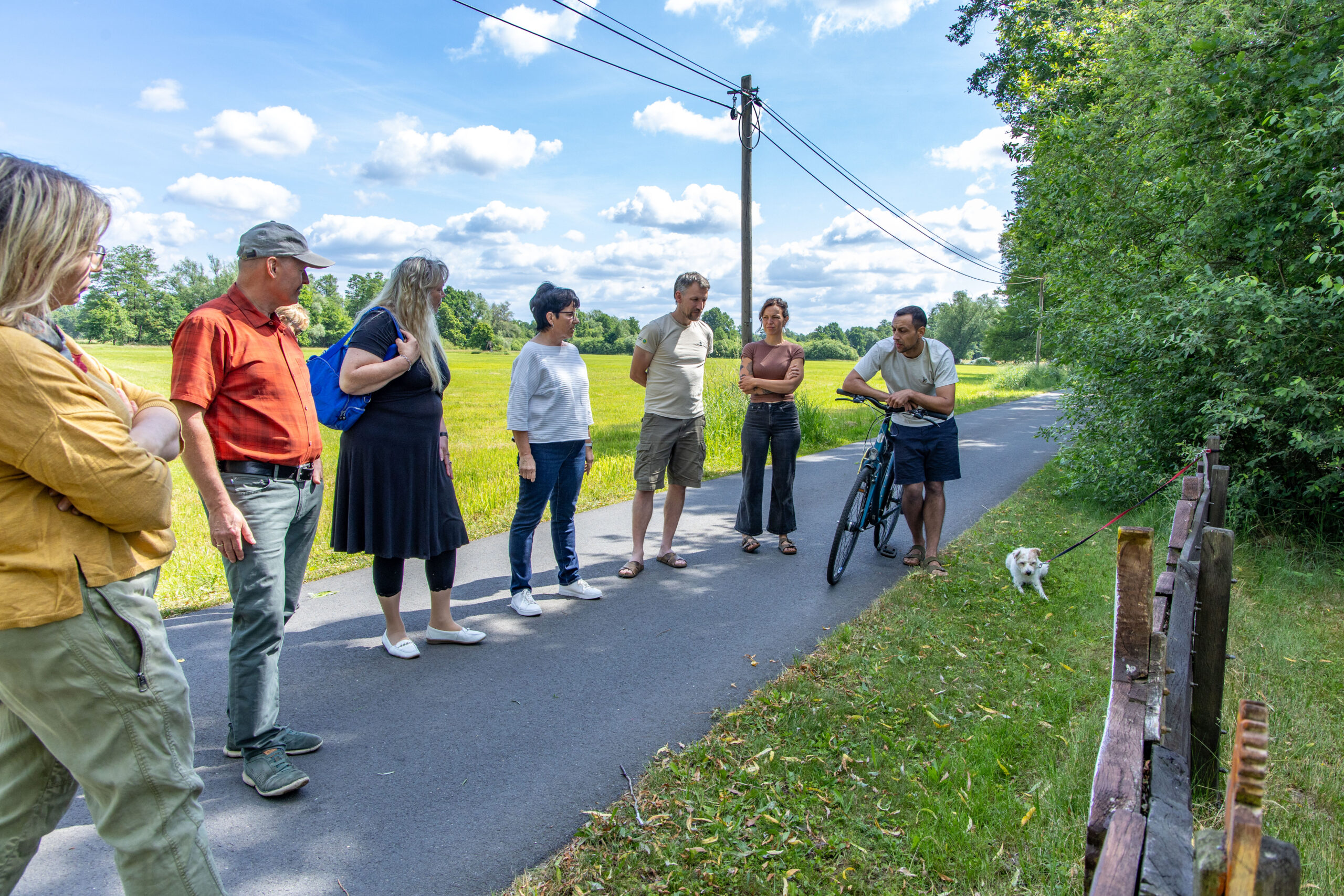
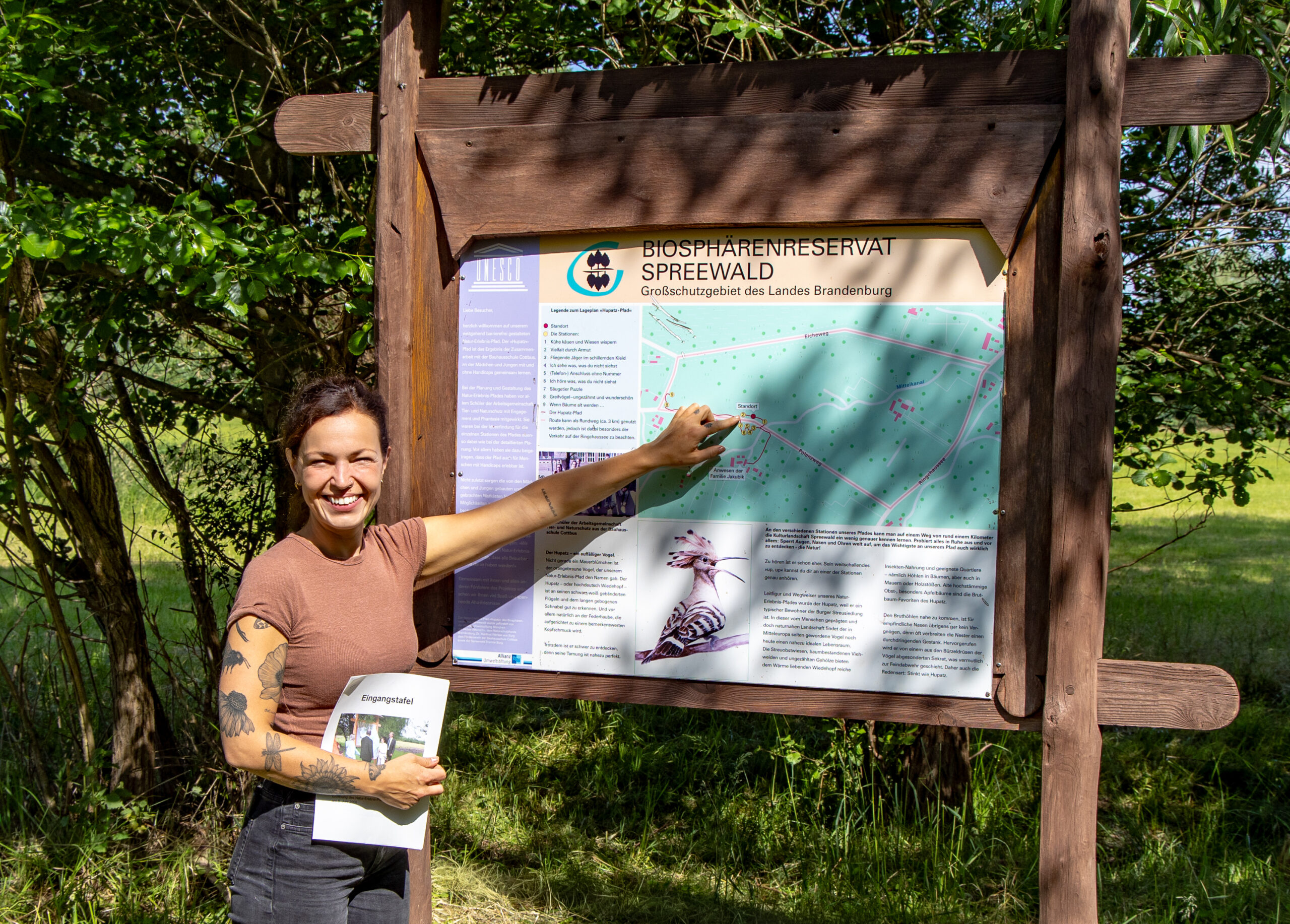
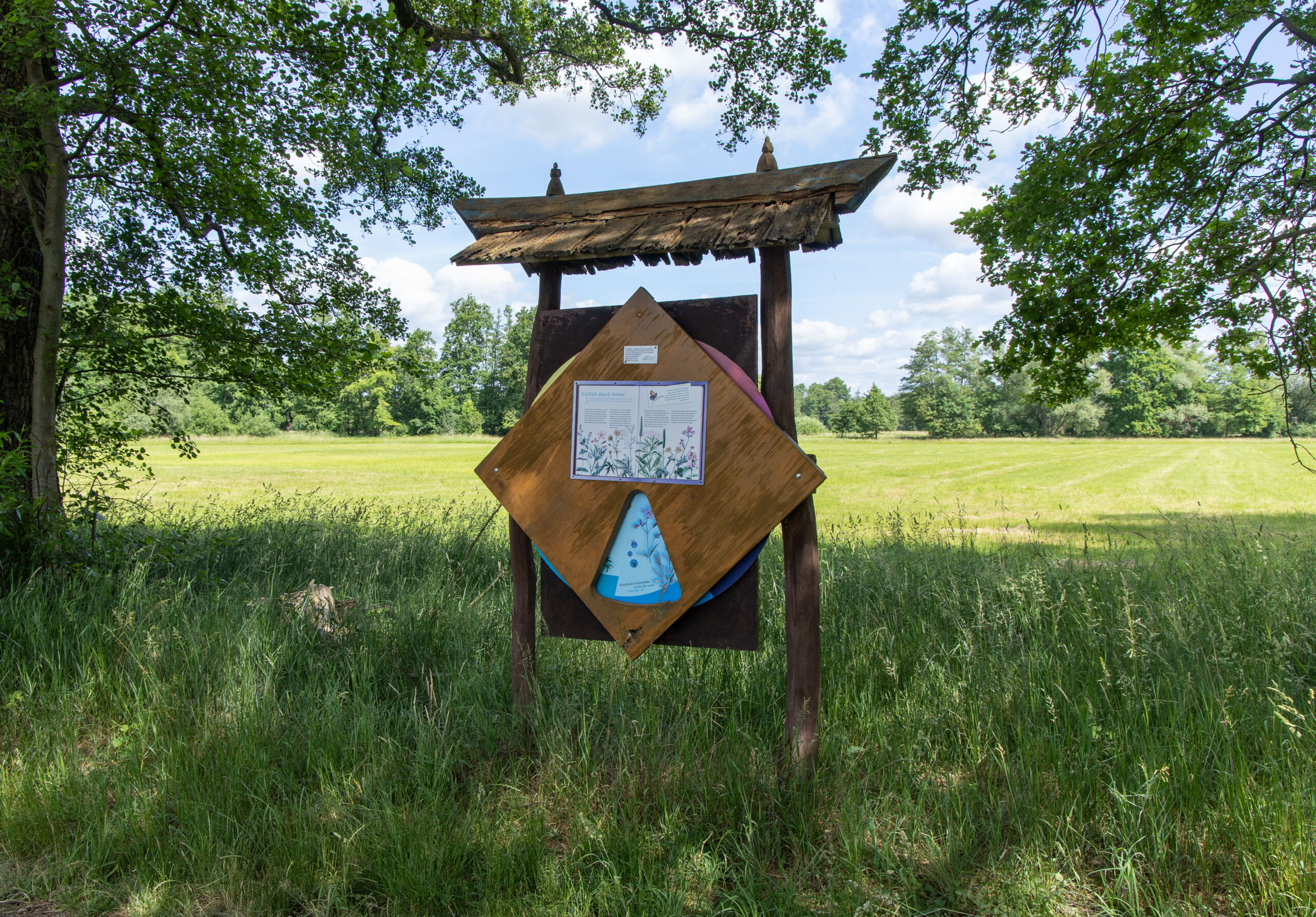
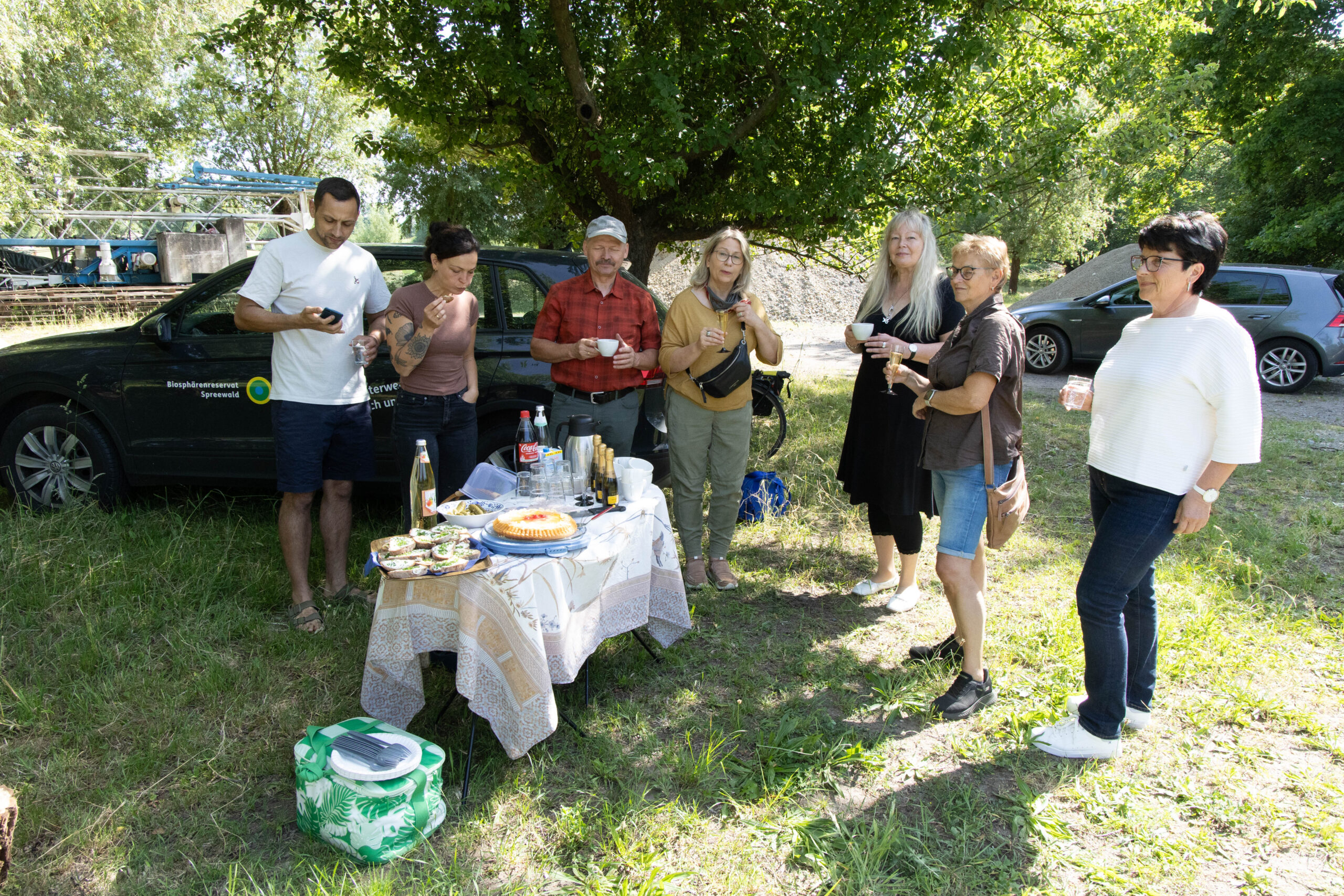
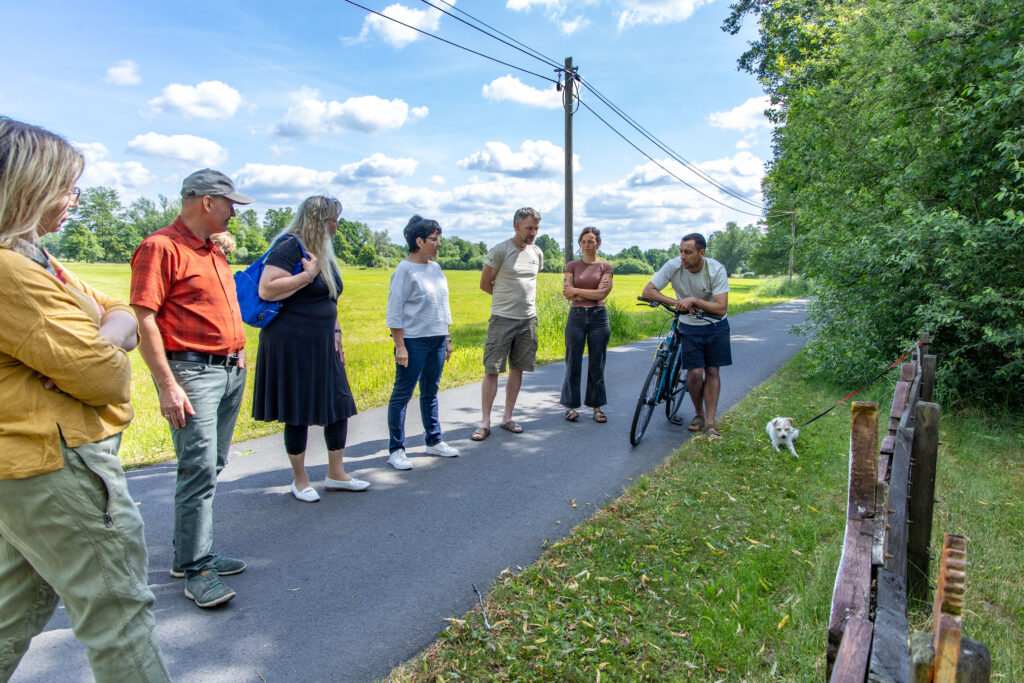
Staff members from the Lübbenau Biosphere Reserve Administration marked the 20th anniversary of one of the first nature trails with a small celebration on-site at Burger Polenzweg. As Annett Schäfer went on to explain, the path was built with the involvement and assistance of students from the Bauhaus School in Cottbus. “Originally, it was supposed to be called the ‘Educational Trail,’ but now we prefer to call it the Nature Discovery Trail, because we don’t really want to ‘lecture’ people,” adds Annett Schäfer. Originally planned as a loop trail but ultimately not implemented due to issues obtaining permission from property owners, the trail is a round trip. “A round trip can also be a double experience,” adds Annett Schäfer. Visitors can actively experience nature at a total of nine stations, one of which is located in the courtyard of the Jakubik vacation resort. For example, the wingspan of a wooden sculpture of a white-tailed eagle can be approximated by spreading one’s arms wide—though it’s unlikely anyone could actually do so. Oversized funnels once allowed people to listen to the sounds of nature, but they were stolen after only a short time. At Jakubiks, there’s a spotting scope for birdwatching set up in a fenced-off area, which the kids especially love to use—when they aren’t distracted or even hindered by curious goats!
Michael Petschick of the Spreewald Biosphere Reserve Administration, based in Lübbenau, pointed out the significant maintenance and repair costs associated with the more than 40 information panels. “Partly due to weathering, and partly due to repeated acts of vandalism, repairs tie up resources and incur costs,” says Petschick. At the same time, he thanked Wolfgang Jakubik, who always keeps an eye on the facilities in his sector.
Peter Becker, June 8, 2026

