
Straupitz’s Byttnaweg Shines in New Splendor
Opening on October 31, 2026
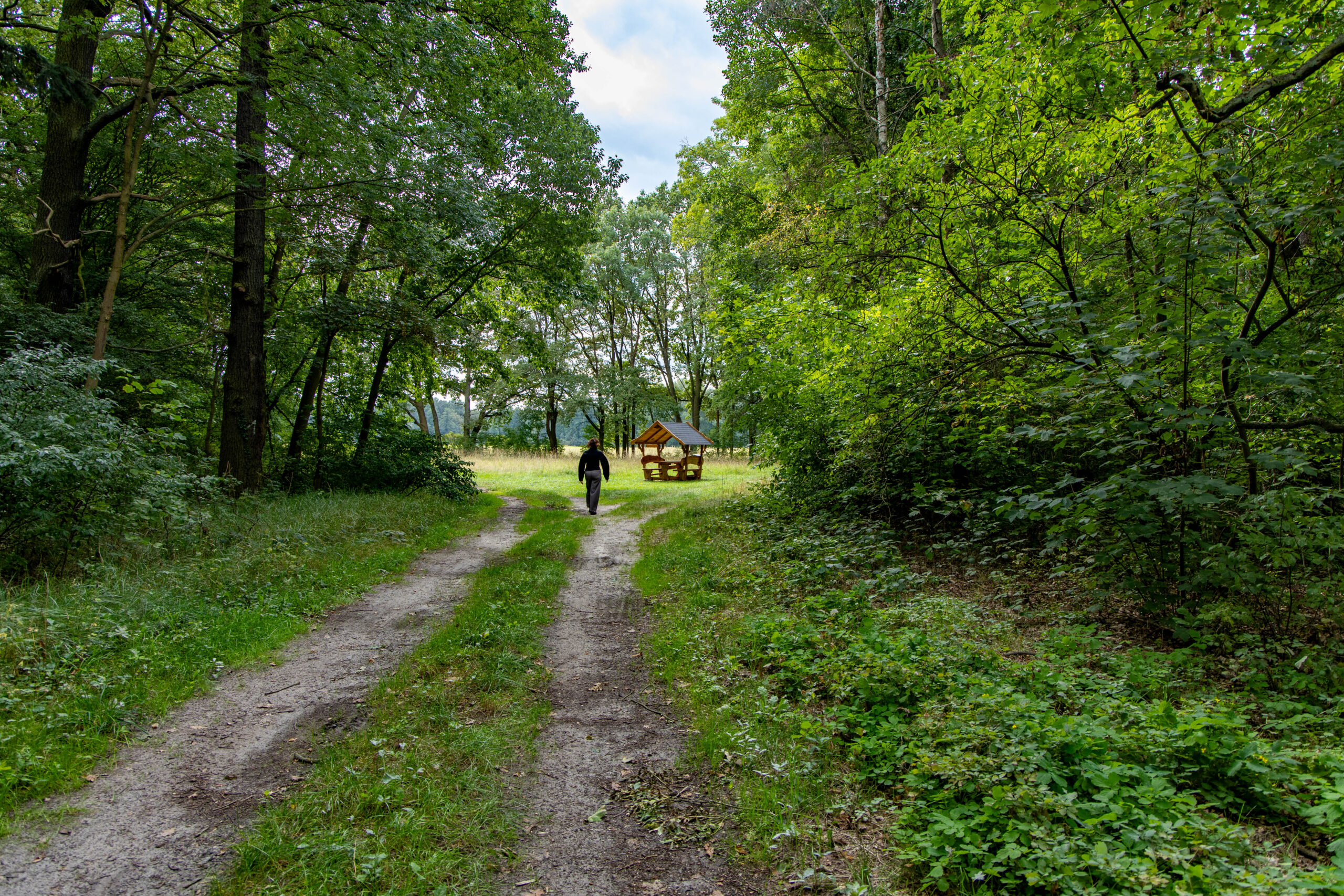
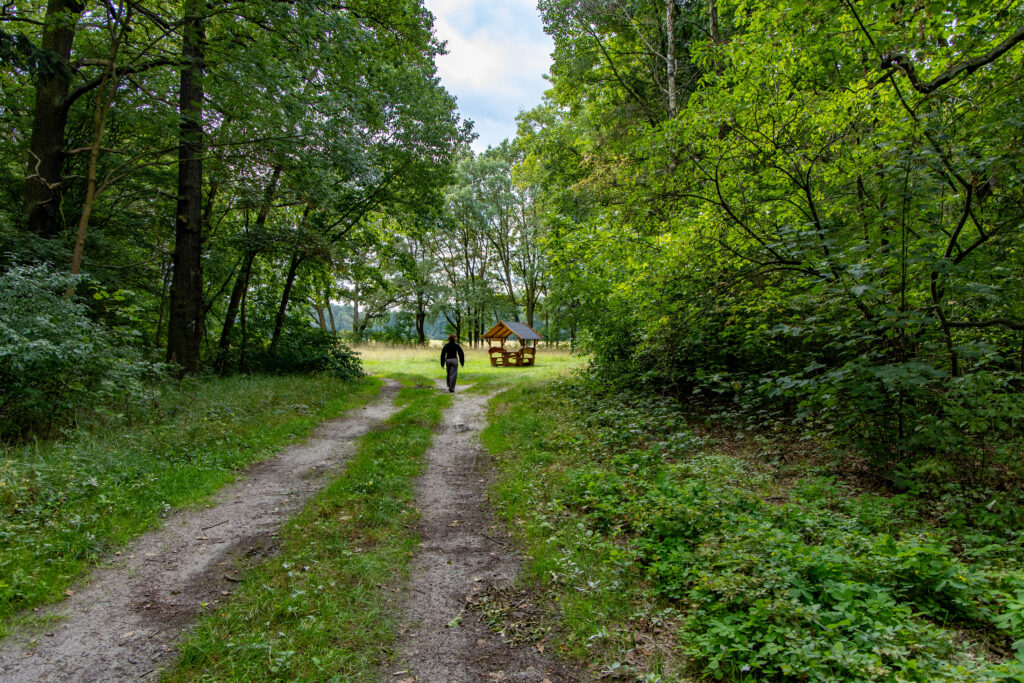
To call this an “opening” is a bit of a stretch, since this path through the town of Straupitz has existed for as long as there have been paths leading to fields and forests. Yet there is something special about it: it is still lined with ancient, historic oak trees—even if their numbers have thinned somewhat. It doesn’t take much imagination to picture what and who passed through there over the past centuries and what happened along the way. Aside from the local Houwald family—landowners who resided there for generations from 1655 to 1945—it was also ordinary people who used this path, in the shade of the giants, for a Sunday afternoon stroll. Farmers drove their livestock into the adjacent oak forests, into the Byttnahain, as this tract of land in the southern part of the Straupitz district is called. Domestic pigs, in particular, found plenty of food here and ultimately ensured for centuries that individual large trees could develop undisturbed, as the pigs posed little threat to them.
It is known that the name is of Wendish origin and roughly means “battlefield.” However, there are no records of any military conflicts that ever took place at this location. There are various spellings, such as Bitna, Büttna, or Bythna.
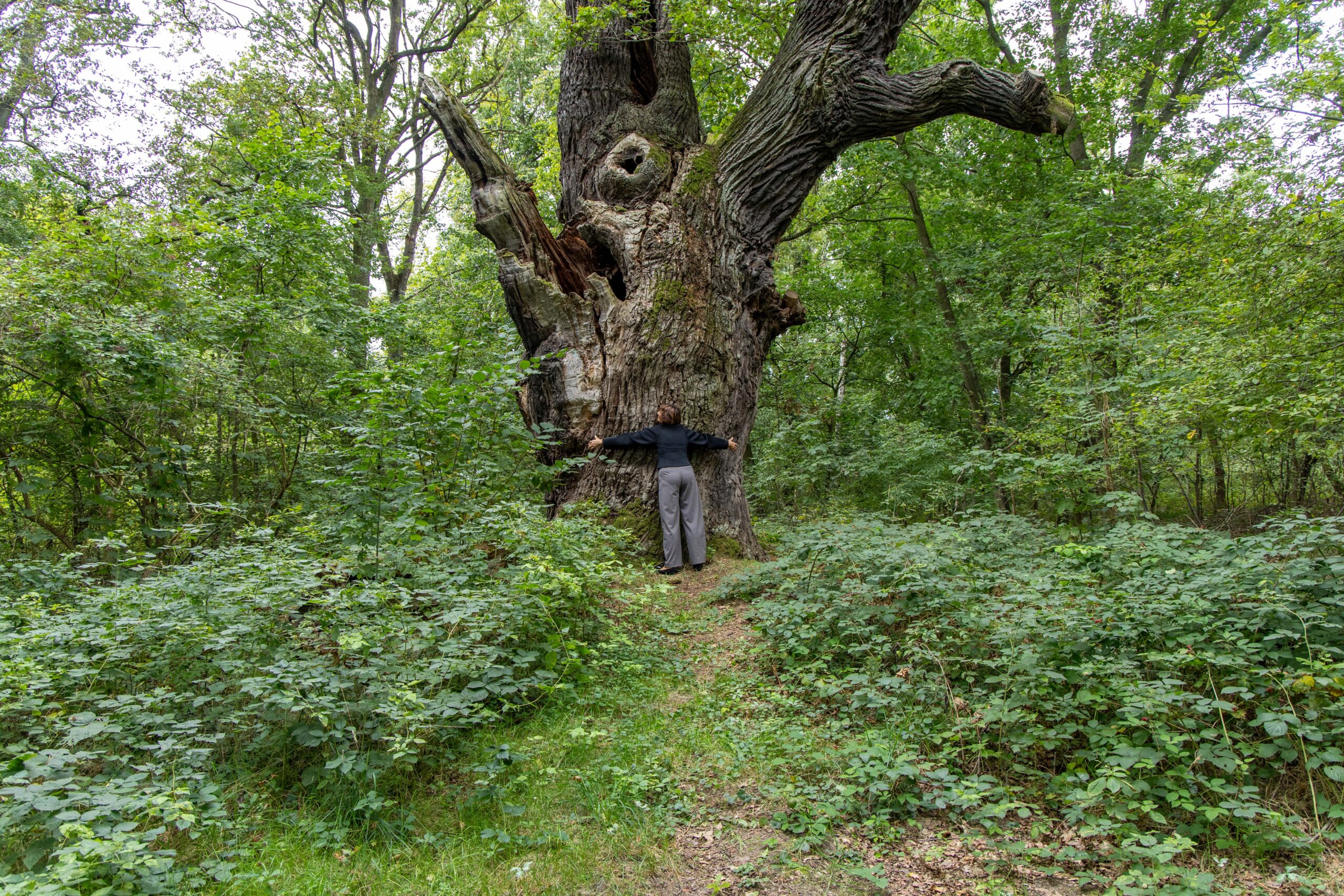
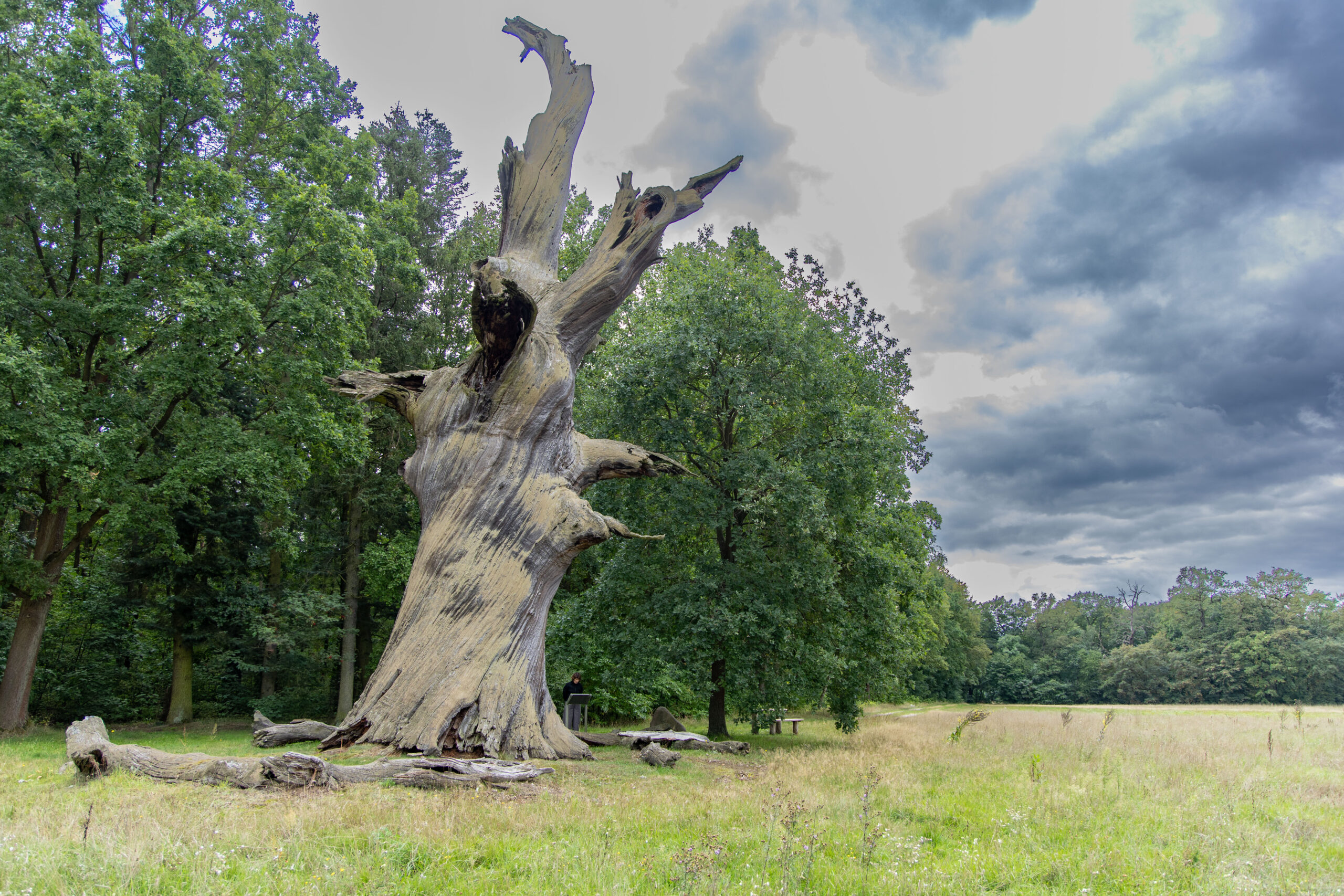
Today, very few of these approximately 800-year-old oaks remain; many stand or lie as stumps along the roadside, such as the famous Florentine Oak. It is said to have shown the first signs of crown dieback during the drought of the summer of 1936 and has been considered dead since 1947. In 2000, the Straupitz Local History and Tourism Association planted a successor tree in the immediate vicinity, which was aptly named “Florentinchen.”
Hikers will come across the Elisabet Oak, the Weidmann’s Rest Oak, the Heinrich Oak, and, of course, an Emperor Wilhelm Oak—because during the era of the emperor cult, every town made a point of paying homage to the emperor. There is also the Johanna Oak and the Bismarck Oaks—several of them, in fact.
The solitary Florentine oak, in particular, inspired painters and photographers alike. Local painter Gerhard Heinrich (1906–1988) created several portraits of it; one of them was donated to the Granary Museum by his granddaughter, Sabine Walter, in 2023. This oak is one of Germany’s first natural monuments; it was designated as such as early as 1901, at a time when little thought was given to nature conservation.
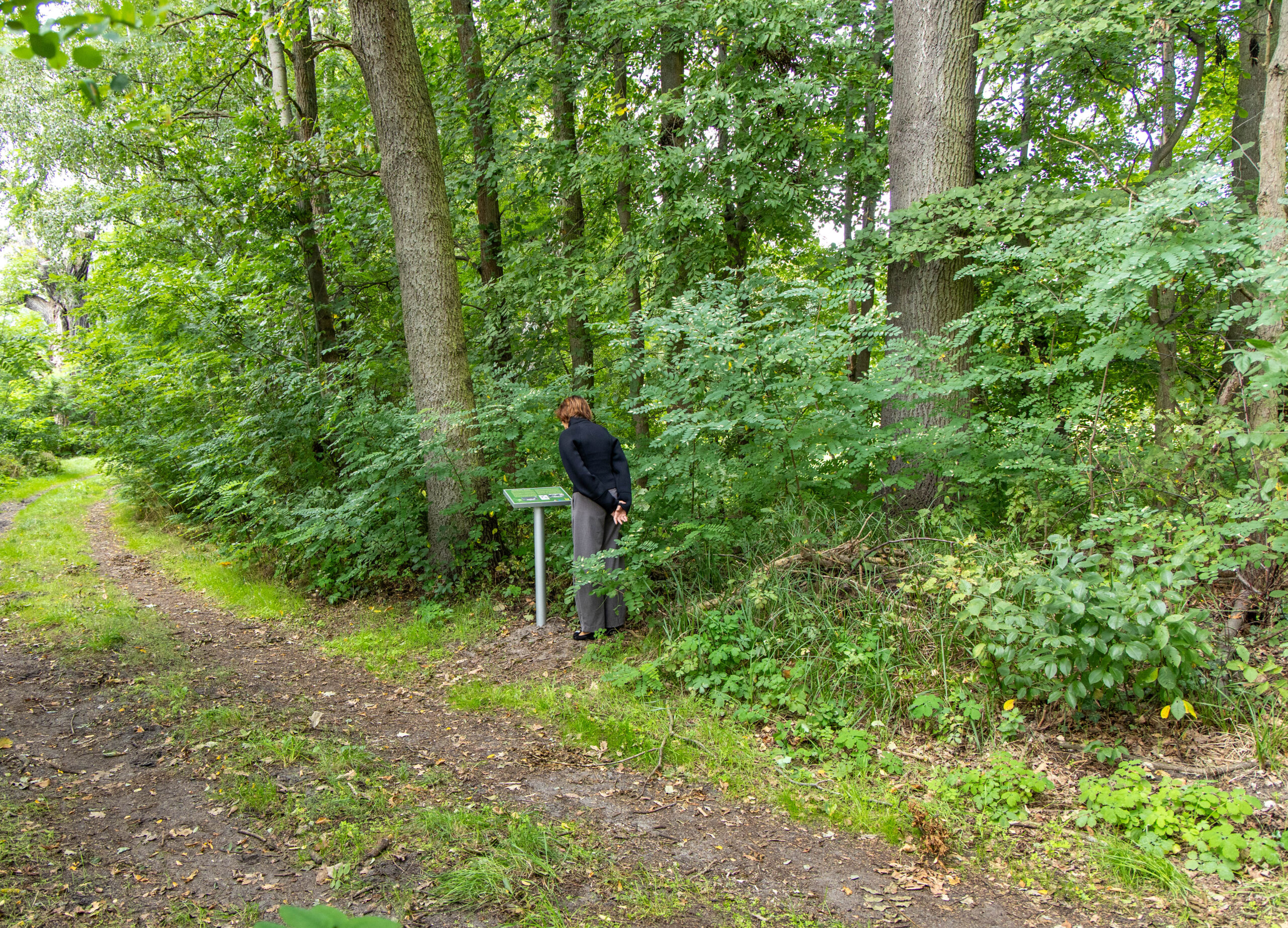
Information panels, flyers, and a website provide details about the Houwalds, after whom the trail is named, as well as the meanings of the names Florentine, Johanna, and Heinrich. As a result, what was once an ordinary hiking trail along the impressive oak trees has suddenly become a historical nature trail. Tobias Raband and André Urspruch, local historians and chroniclers from Straupitz, compiled the information for the informational signs.
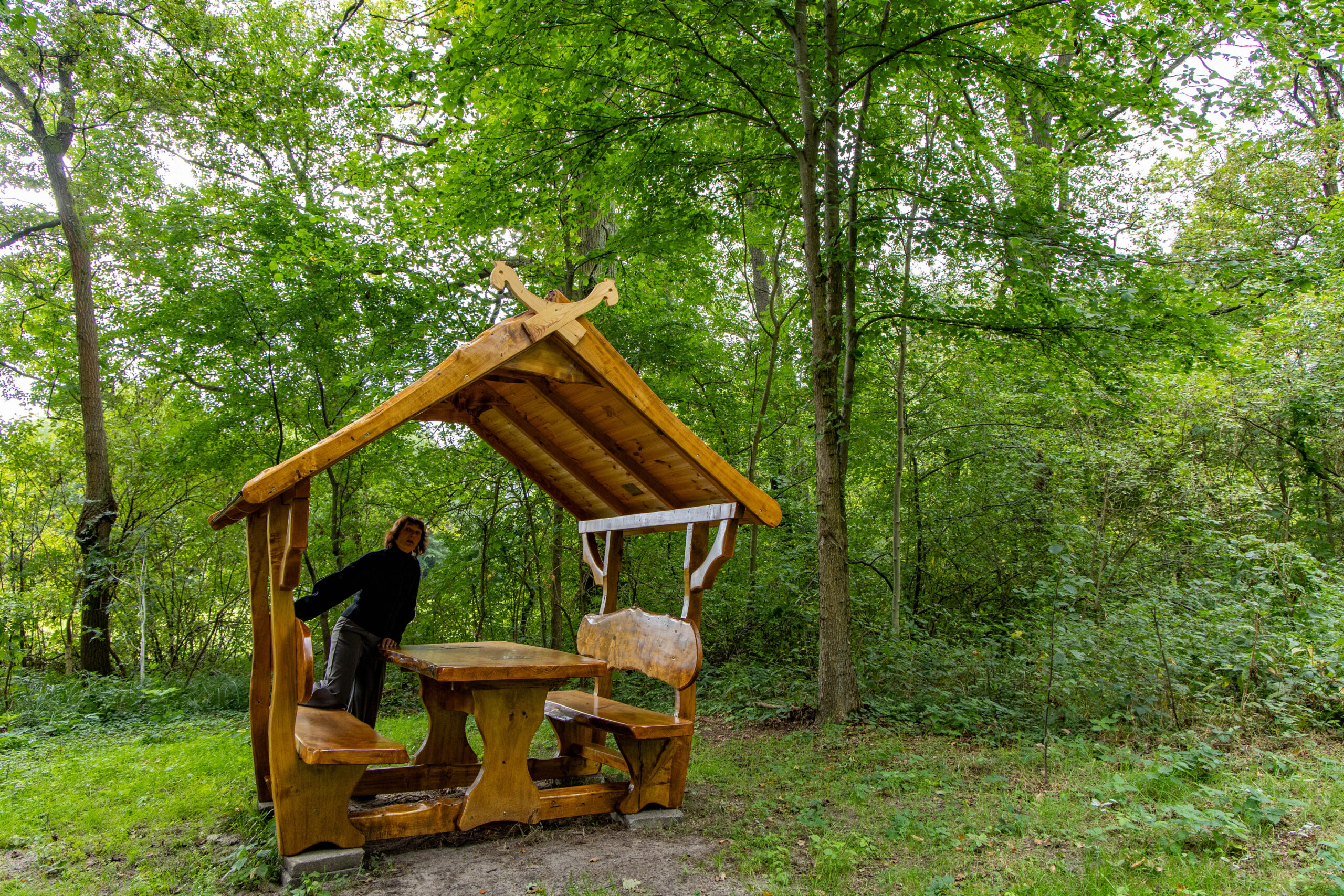
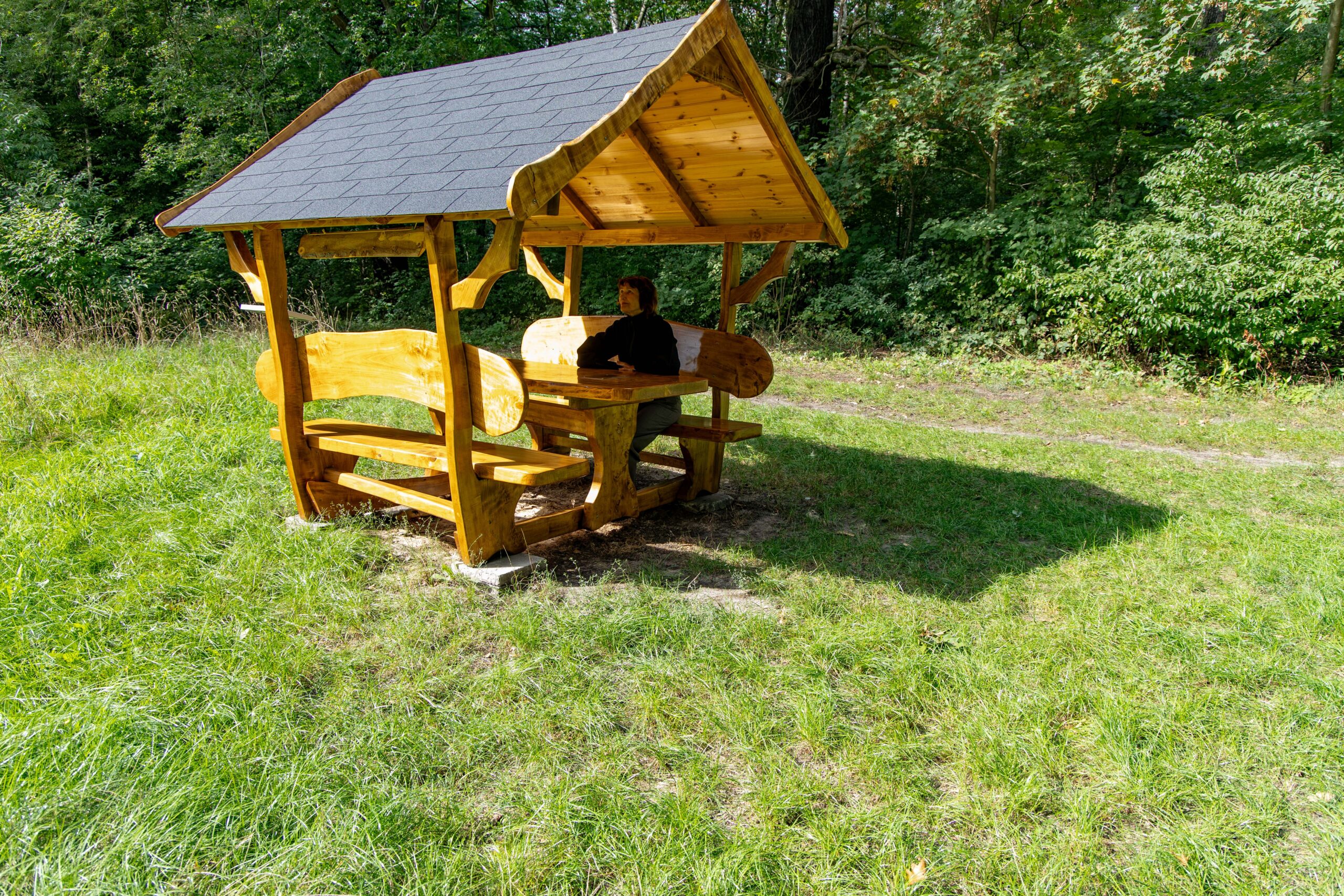
The signs and huts were created through a collaboration between the Local History and Tourism Association and the municipality of Straupitz. Support was provided by the Sorbian Foundation, the LDS district, and the Tourism and Development Corporation of the Lieberose/Oberspreewald Administrative District.
On October 31, the Straupitz Local History and Tourism Association invites you to the grand opening of the nature trail, starting at 2:00 p.m. Parking is available at the turnoff for Byhlen. The trail is already open to the public; many cyclists are already stopping to read the interpretive signs or taking a break in one of the shelters.
Unfortunately, the remote location also attracts vandals: A gable cross featuring crossed snake heads was unscrewed just a few days after the huts were erected. The organizers feel disheartened, as if their work has been disregarded. While such acts do undermine the efforts of the association, the members refuse to let it get them down: “Maybe someone will just screw the cross back on under cover of night…?” was the hopeful comment heard from among them.

