
Mina’s Life Through Dance
A dance performance dedicated to the Lower Sorbian poet Mina Witkojc (1893–1975) – Burg, October 3, 2026
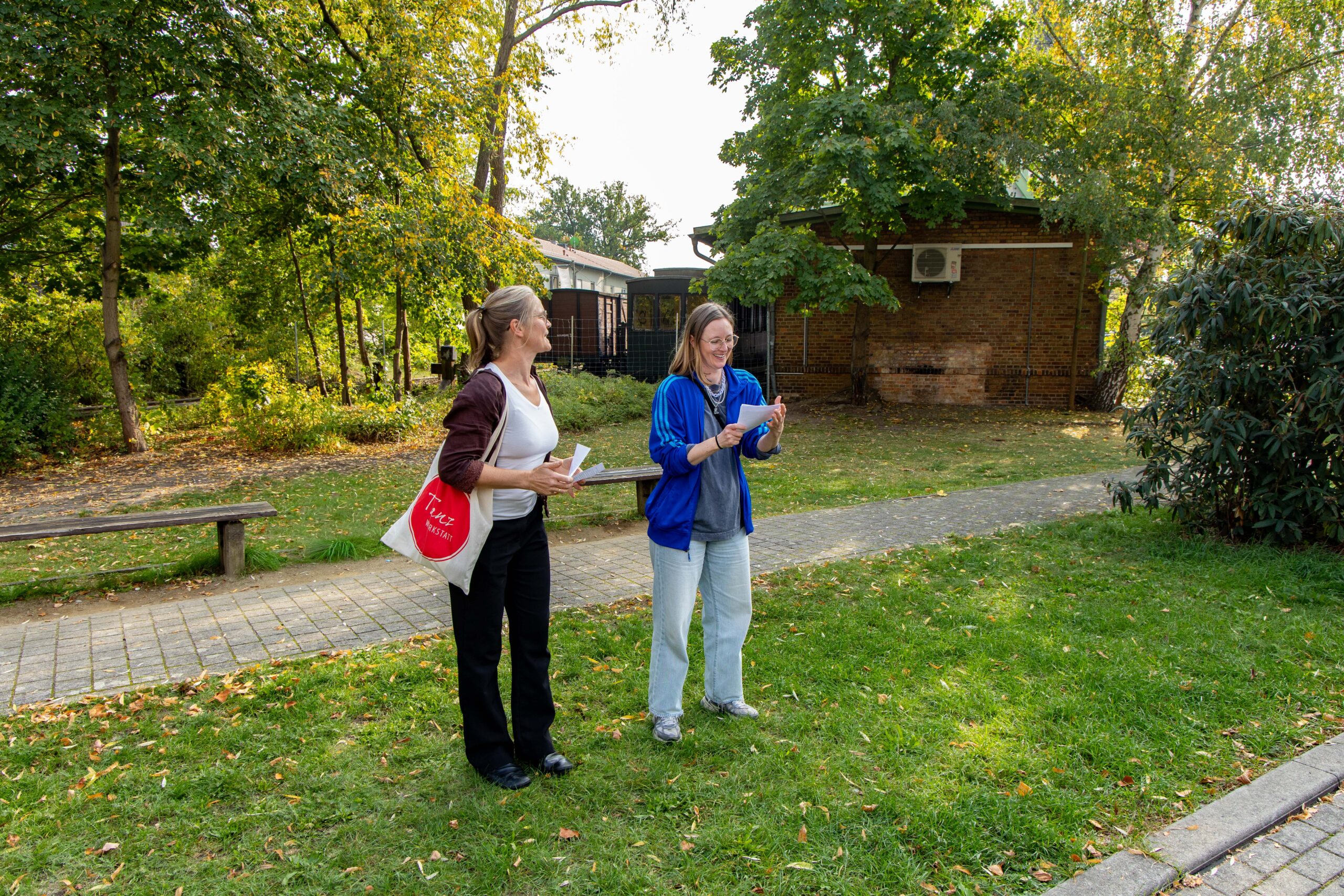
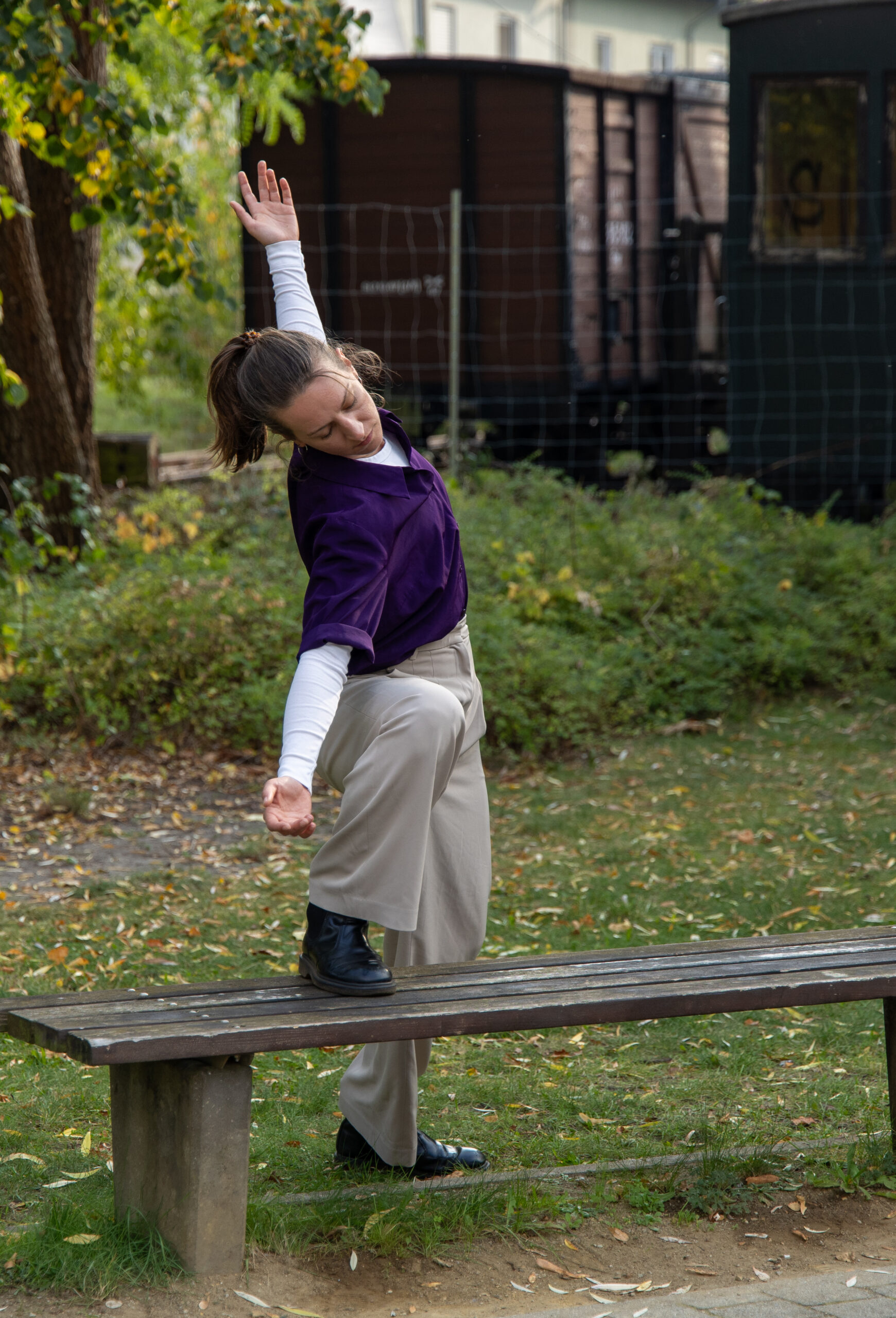
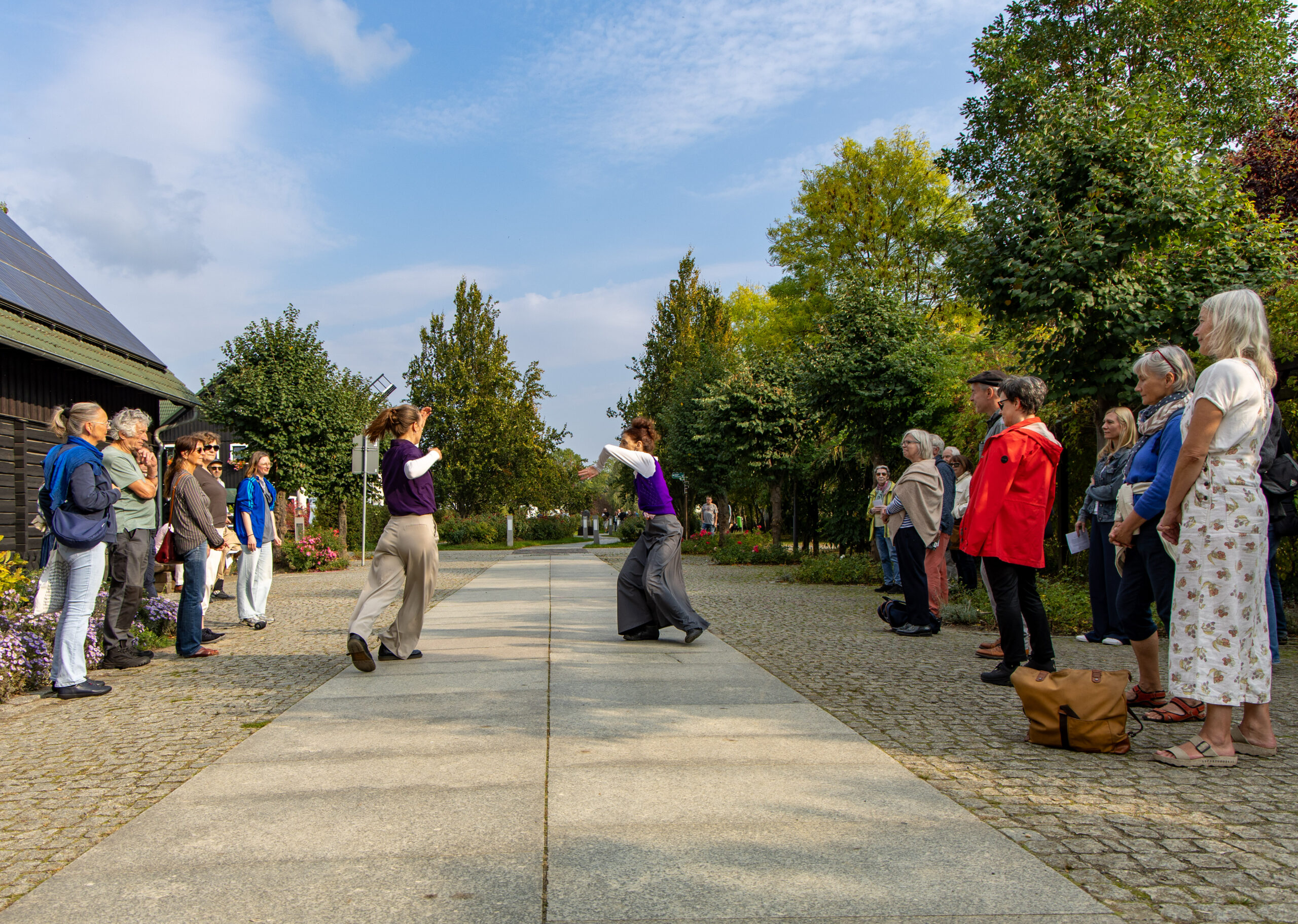
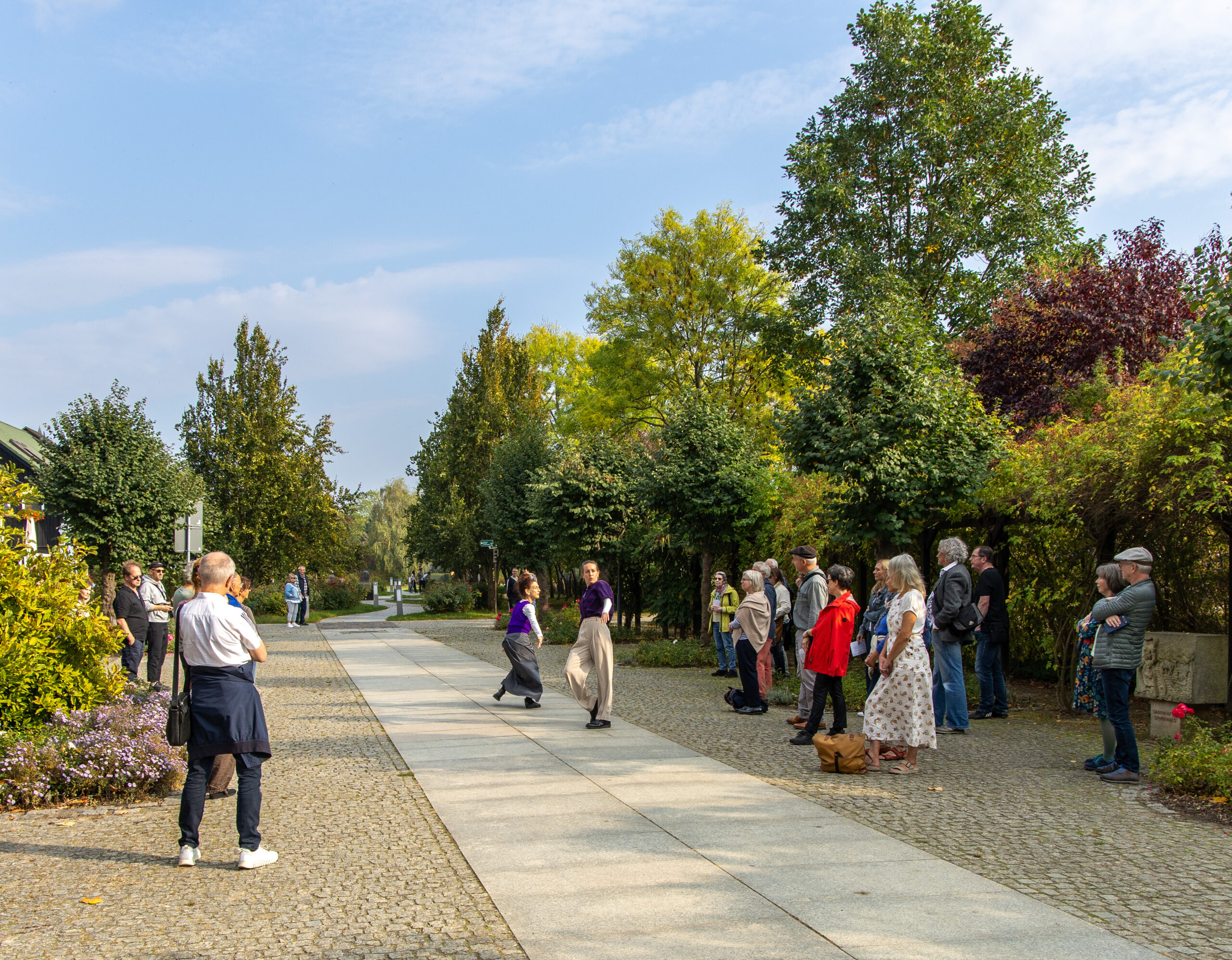
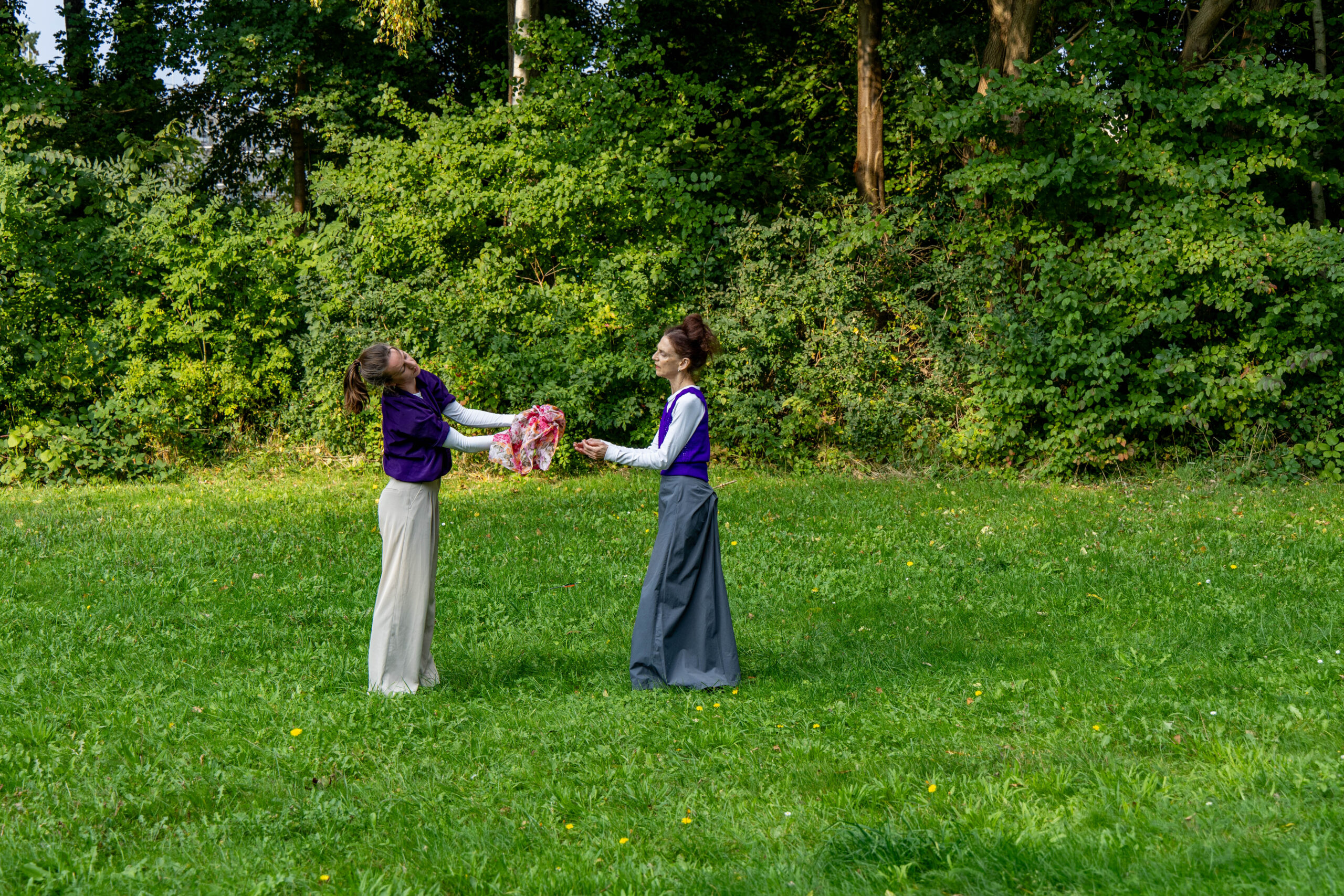
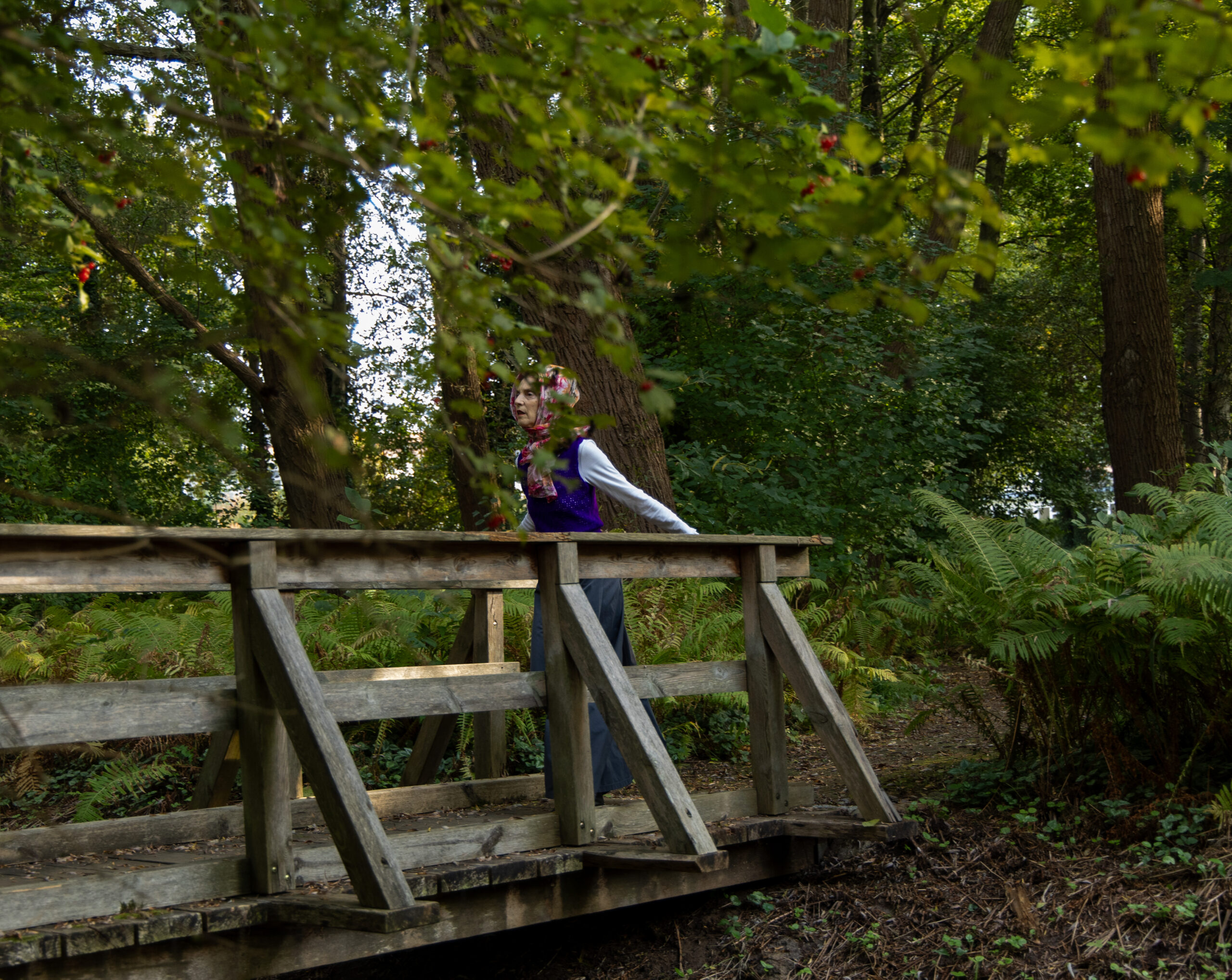
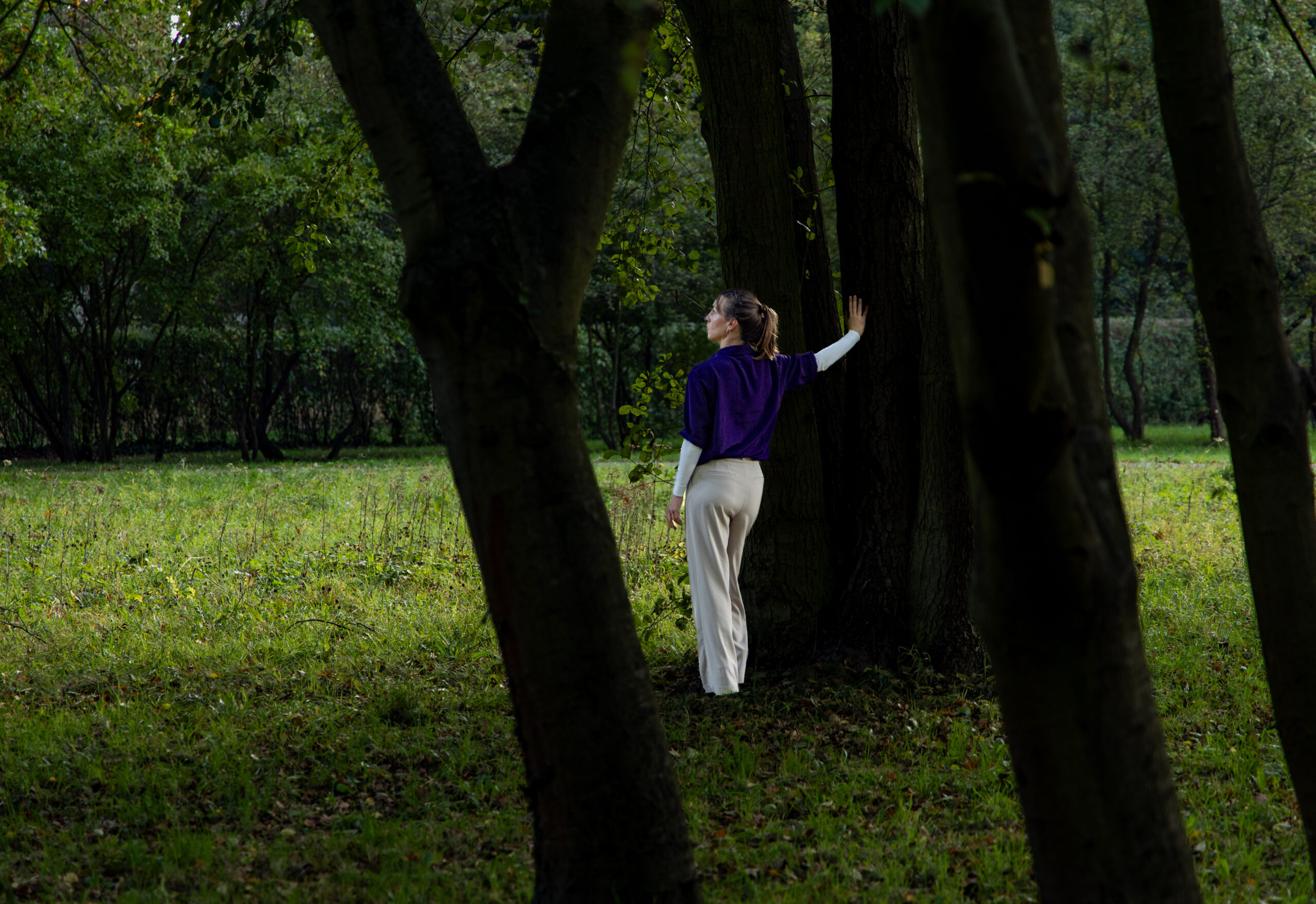
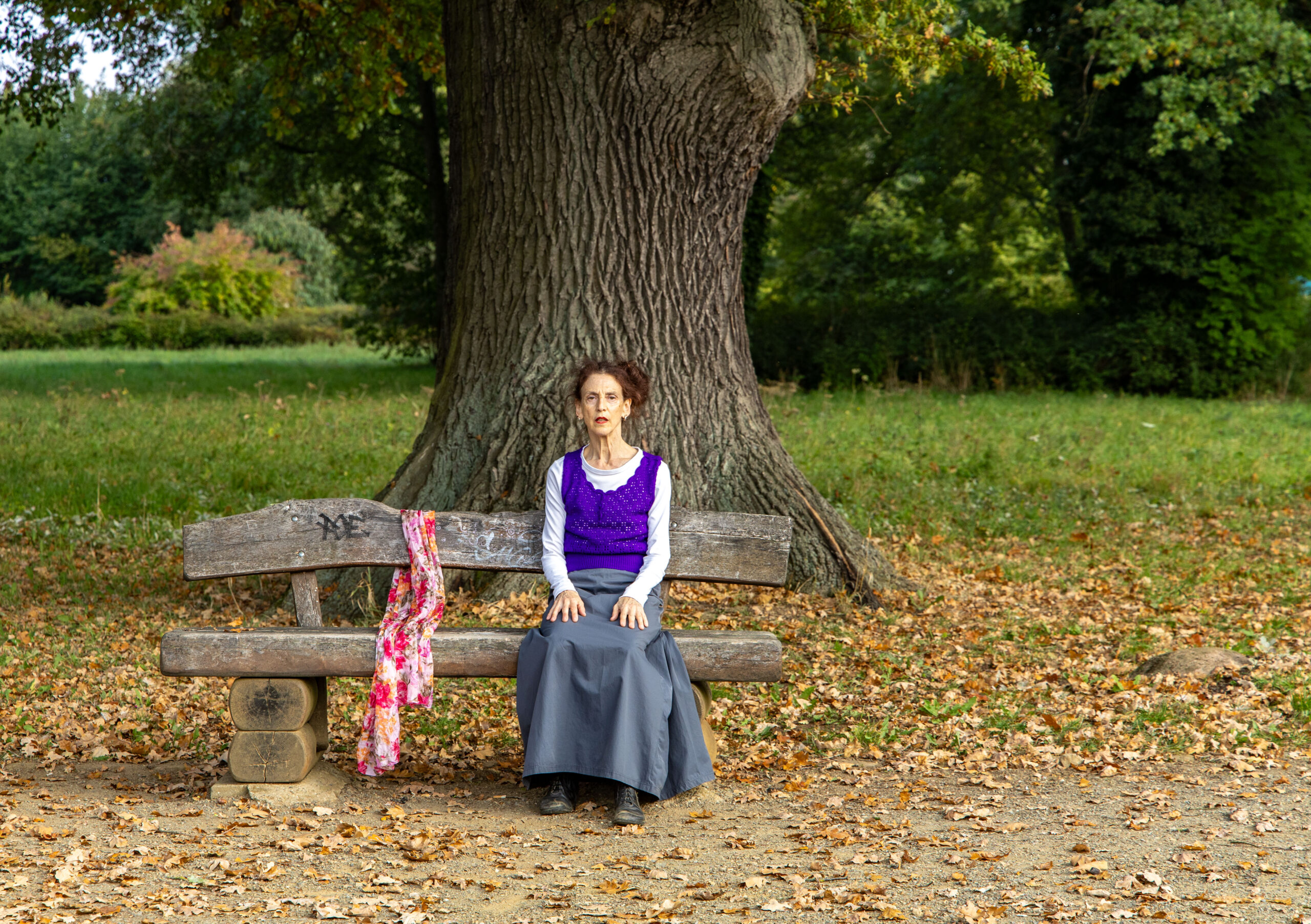

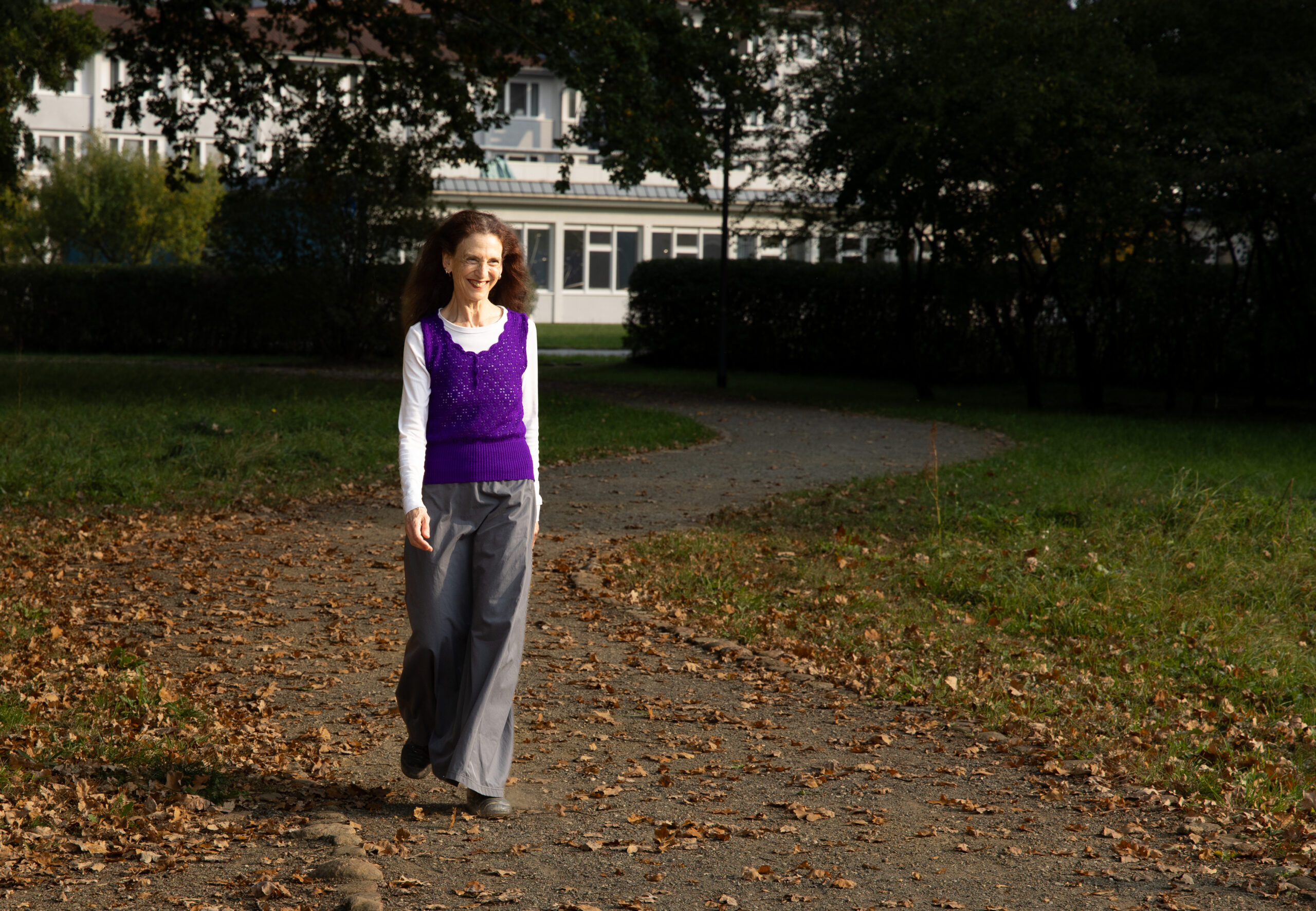
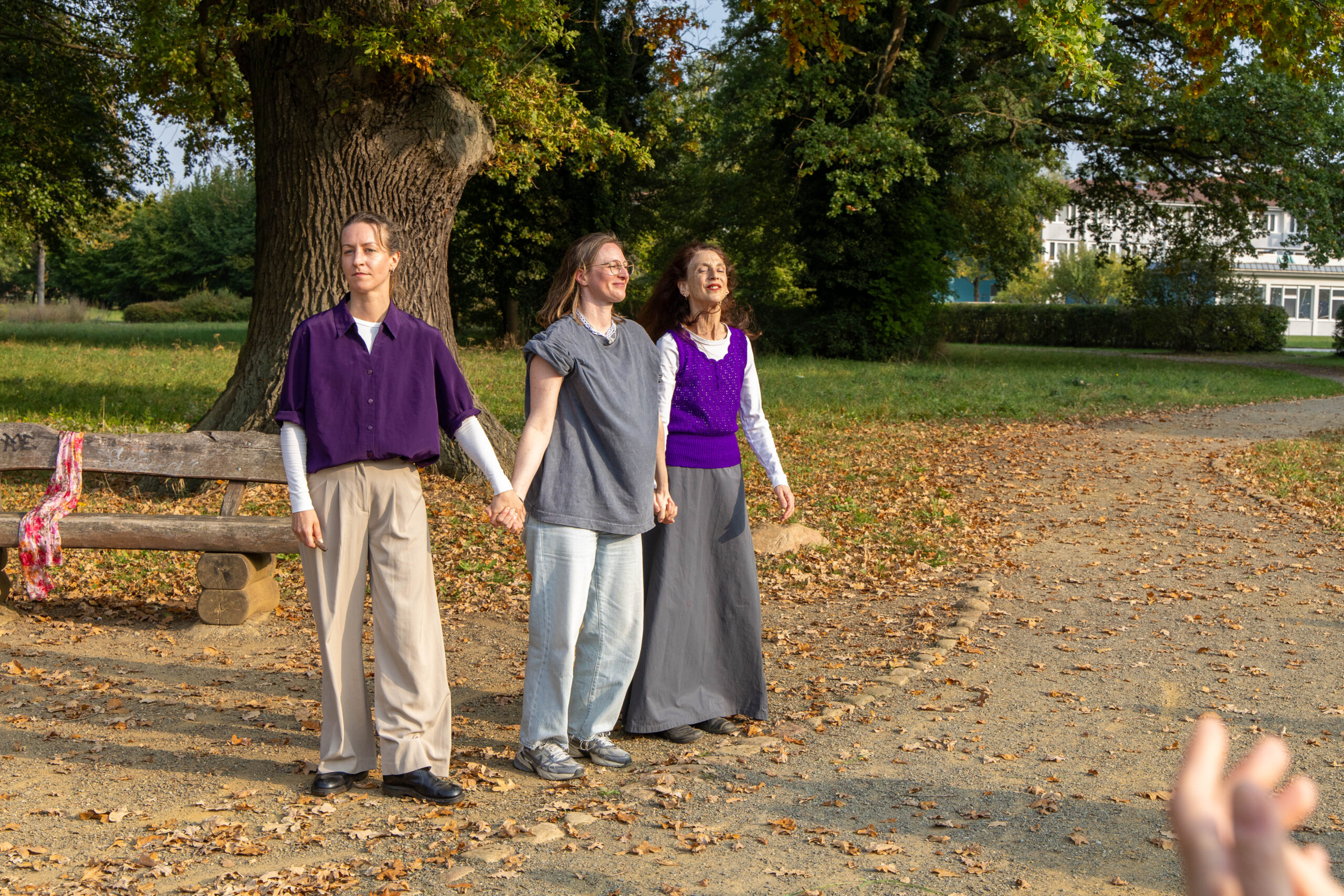
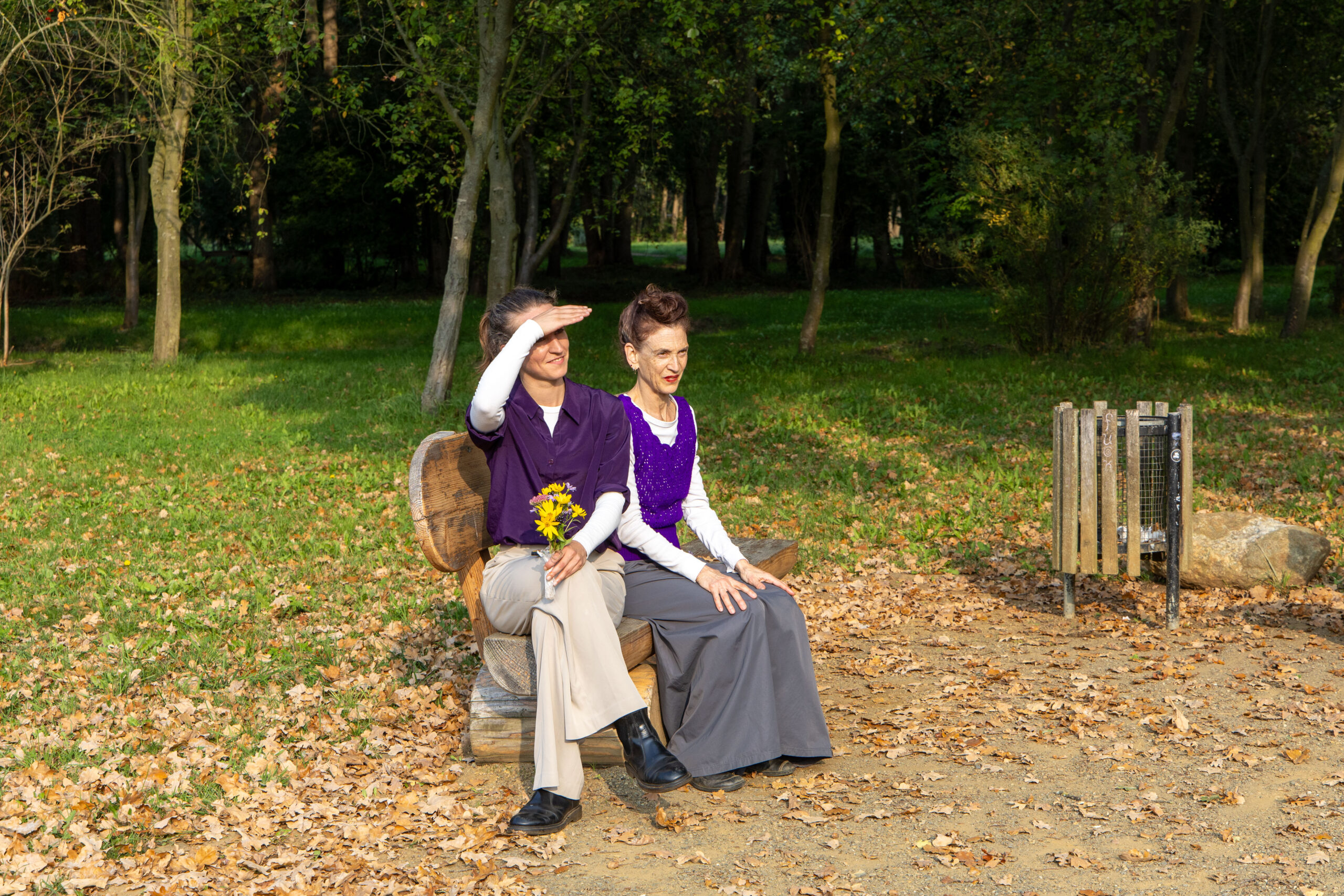
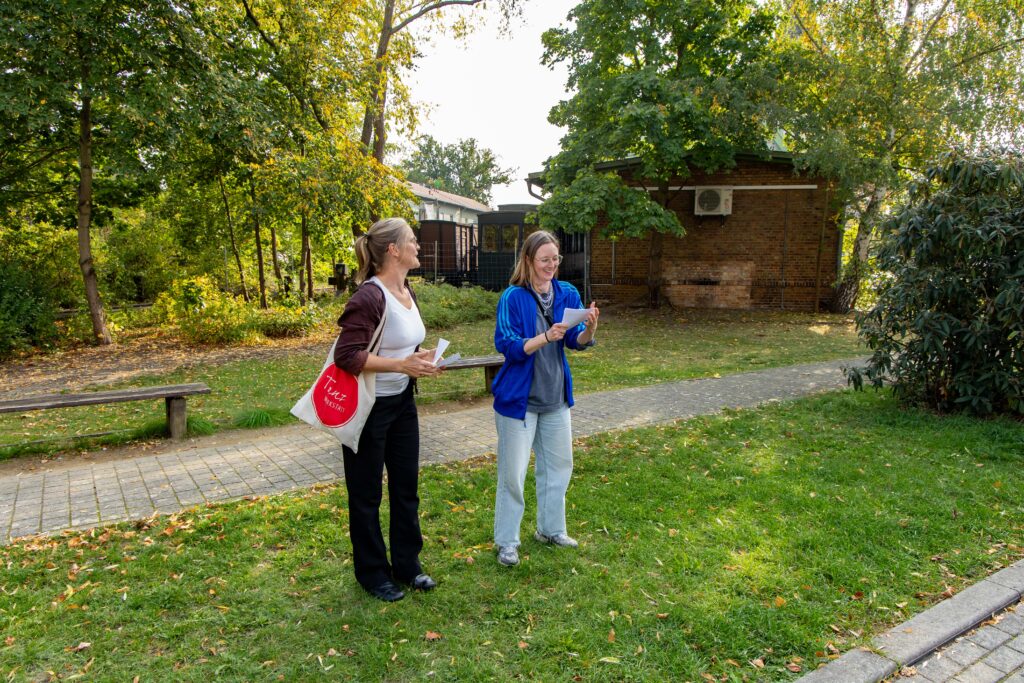
The Burger Kurpark was very crowded on German Unity Day; many guests from the adjacent rehabilitation clinic were also strolling along the paths and sitting on the benches. They watched with some surprise as the procession made its way through the park: a group of about 30 people was accompanied by two dancers circling around them, all set to ethereal music. But anyone who paid close attention and noticed the posters scattered here and there could soon figure out what it was all about. The invited guests were a bit more in the know, as the performance walk was dedicated to none other than Mina Witkojc. The Sorbian poet had her roots in Burg: She was born in 1893 at the Pohlenzschänke and grew up in Burg. Her work at Berlin-based defense contractors and in the Burger restaurant industry are just a few of the milestones in the life of Wilhelmine Wittka, as she was known by her German name. She promoted the Sorbian language as a distinctive feature of her homeland and wrote poems and song lyrics. She later worked for Sorbian publishing houses, but was forced to leave Lower Lusatia by official order due to alleged non-Aryan behavior. It was not until her later years that she spent any significant time in Burg again, where she was also laid to rest in 1975.
Klaus Gebler, a young teacher at the time, ran into her several times in Burg and struck up a conversation with her. “She was unassuming and striking at the same time; she was open to conversation and wore traditional Sorbian clothing even in everyday life—a sight that was still occasionally seen in the village in the late 1960s. Her favorite topic was her cats, one of which she would have to go looking for every now and then. I would never have guessed that I was standing before the revered Sorbian poet Mina Witkojc—and in her modesty, she didn’t let me know that either.”
Decades later, Klaus Gebler attended the dance performance; he had since retired and was known as the local historian of Burger. With his firsthand account at the end of the event, he made a deep impression on both artists and participants; he was the only one who had known the Sorbian poet personally.
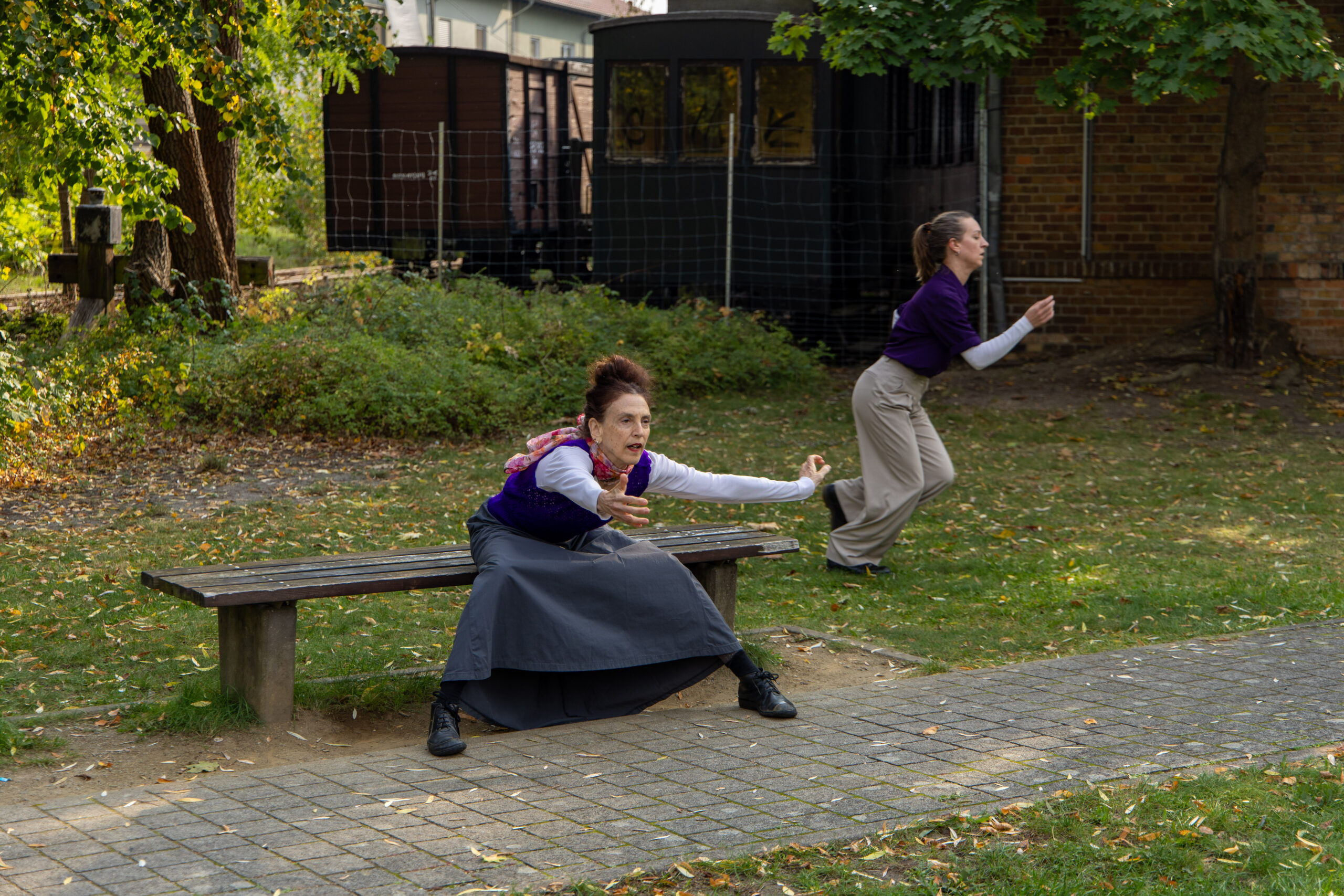
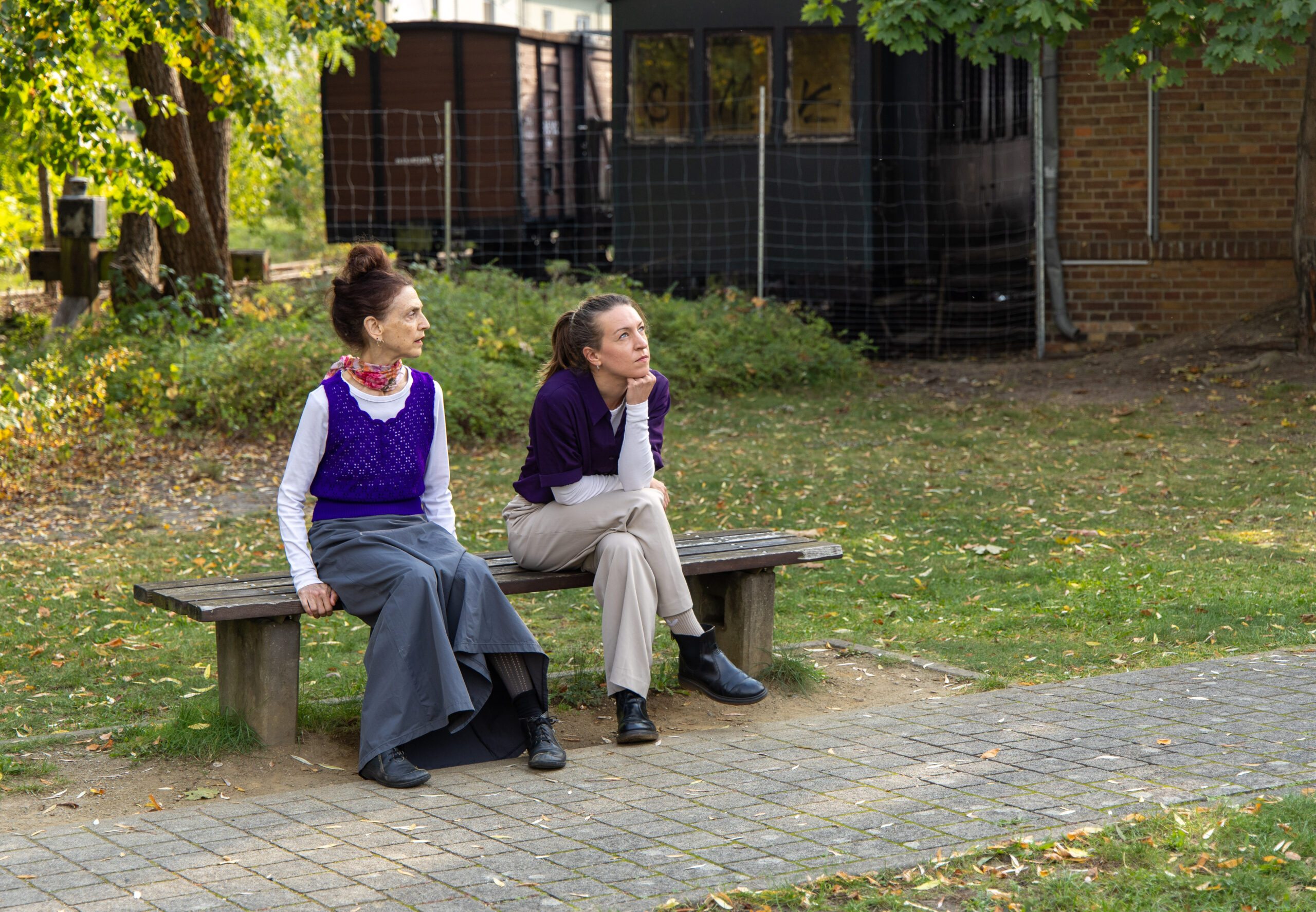
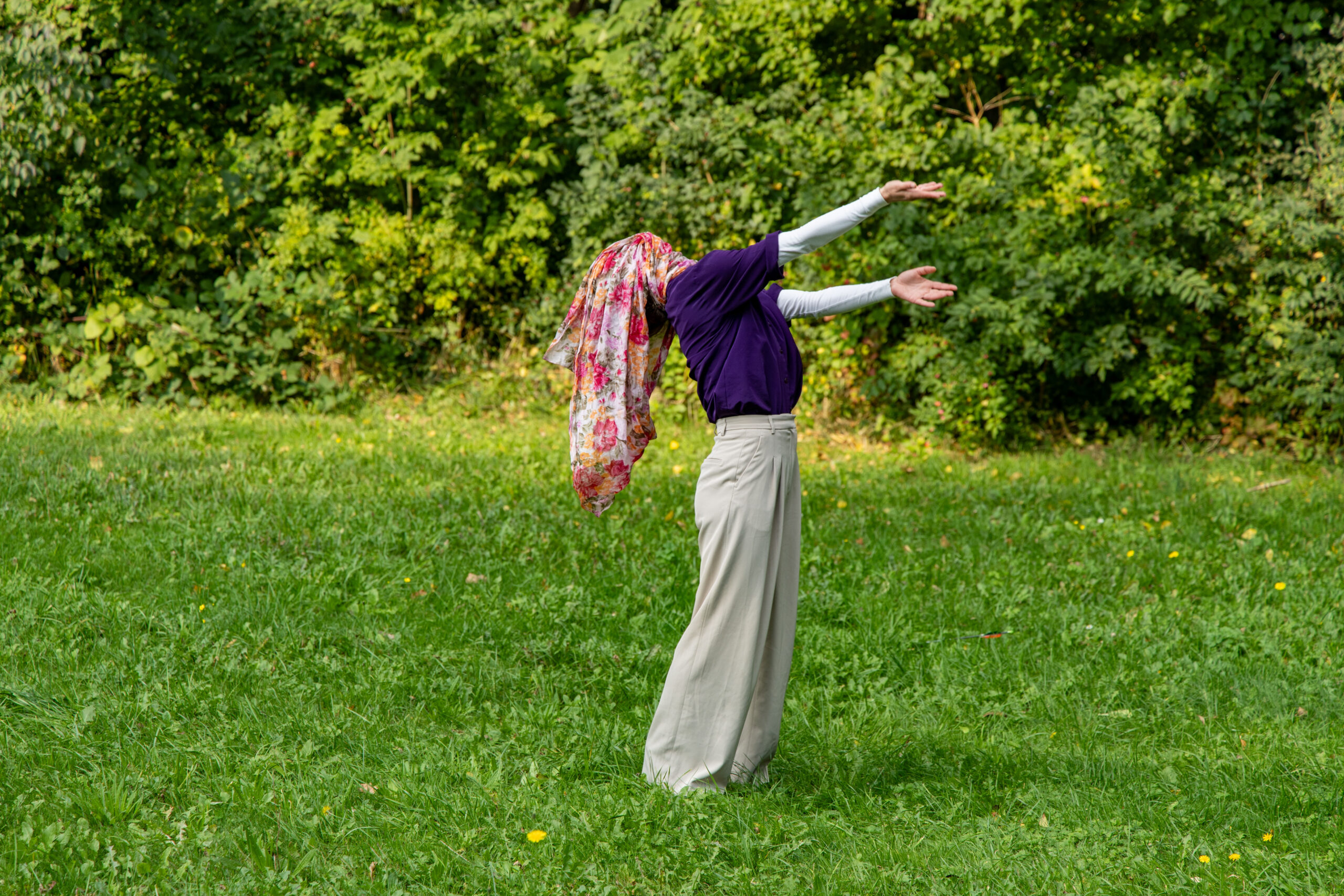
The many paths Mina Witkojc took in her life were the subject of the dance project, which was part of the trilogy “FrauenOrteLausitz” by “ars momento e.V.” and the “tanzkompanie golde g.” The performance began at the former Burger station of the Spreewaldbahn. The train station was the actual setting, because it was from here that Mina Witkojc traveled to Berlin and later to Bautzen, Erfurt, or Prague. Two dancers, Julek Kreutzer and Michal Hirsch, portrayed the younger and older Mina at the same time. Julek Kreutzer, the younger Mina, was drawn to the world; she expressed both her longing and her inner conflict, her return home, and her ever-new journeys into an uncertain future. Michal Hirsch portrayed a woman who is seasoned by life but still searching and in despair. In the spa gardens—where the train had now arrived—the winding paths and the vast park served as a metaphor for the poet’s life. Michal Hirsch demonstrated this by moving deeper into the park, perhaps to avoid drawing attention to herself, while the younger “Mina” tended to lead the way, rushing ahead, even dancing her way across the adjacent meadows.
Choreographer Ronja Häring has succeeded in authentically incorporating both the original locations and the poet’s life, marked by its ups and downs. The idea of presenting the younger and older Mina Witkojc side by side—their paths, their missteps, and their longings, with all their contradictions and, at times, their finality—resonated with the audience and was met with enthusiastic applause. Ronja Häring: “I think we were all captivated by the magic of the original venue—dancers and visitors alike.”
Thomas Schwarz had traveled from Schleife: “The trip to Lower Lusatia was more than worth it; everything went perfectly, and the magical setting did the rest—I’m heading home deeply moved.”
Organizer Golde Grunske, project director of the dance company of the same name, also looks back on the event with satisfaction: “Of the three events held in Burg, this was the best, partly because of the fairly large number of participants. The conversations afterward were important for both the artists and the participants—and they took place in a very relaxed setting at the edge of the park,” she said. In total, three events on different themes took place as part of the “FrauenOrteBrandenburg” project—in Guben, Cottbus, and most recently in Burg—with funding from the Brandenburg State Ministry of Science, Research, and Culture and ars momento e.V.
Peter Becker, October 3, 26

