
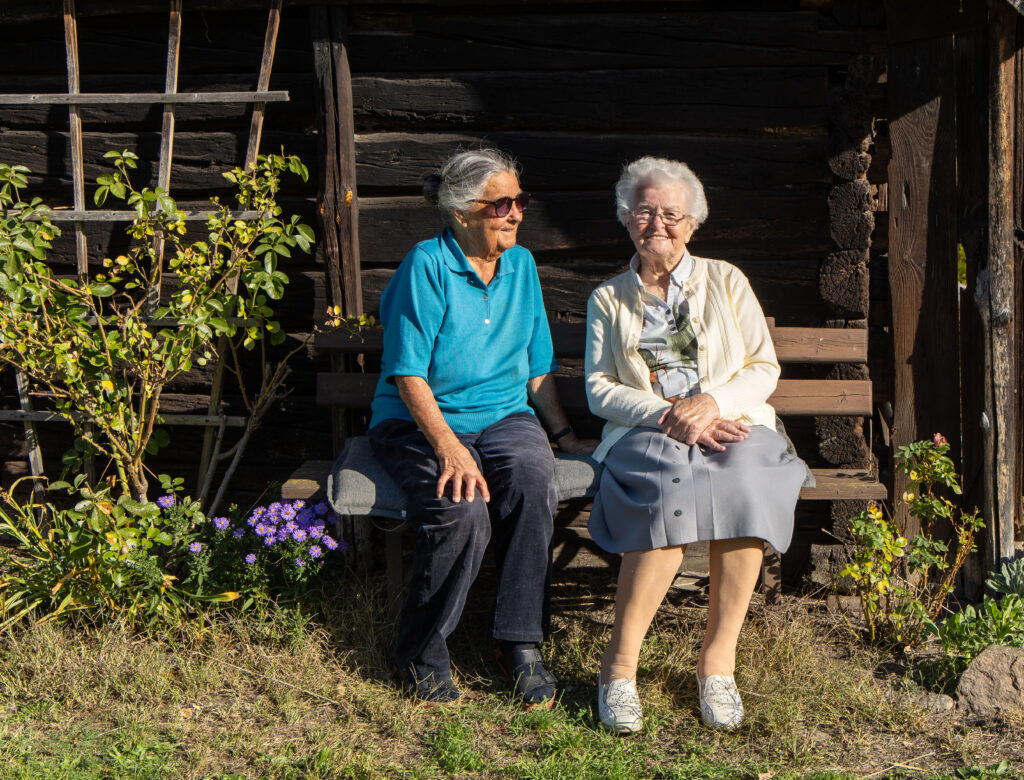
Friends for half a century
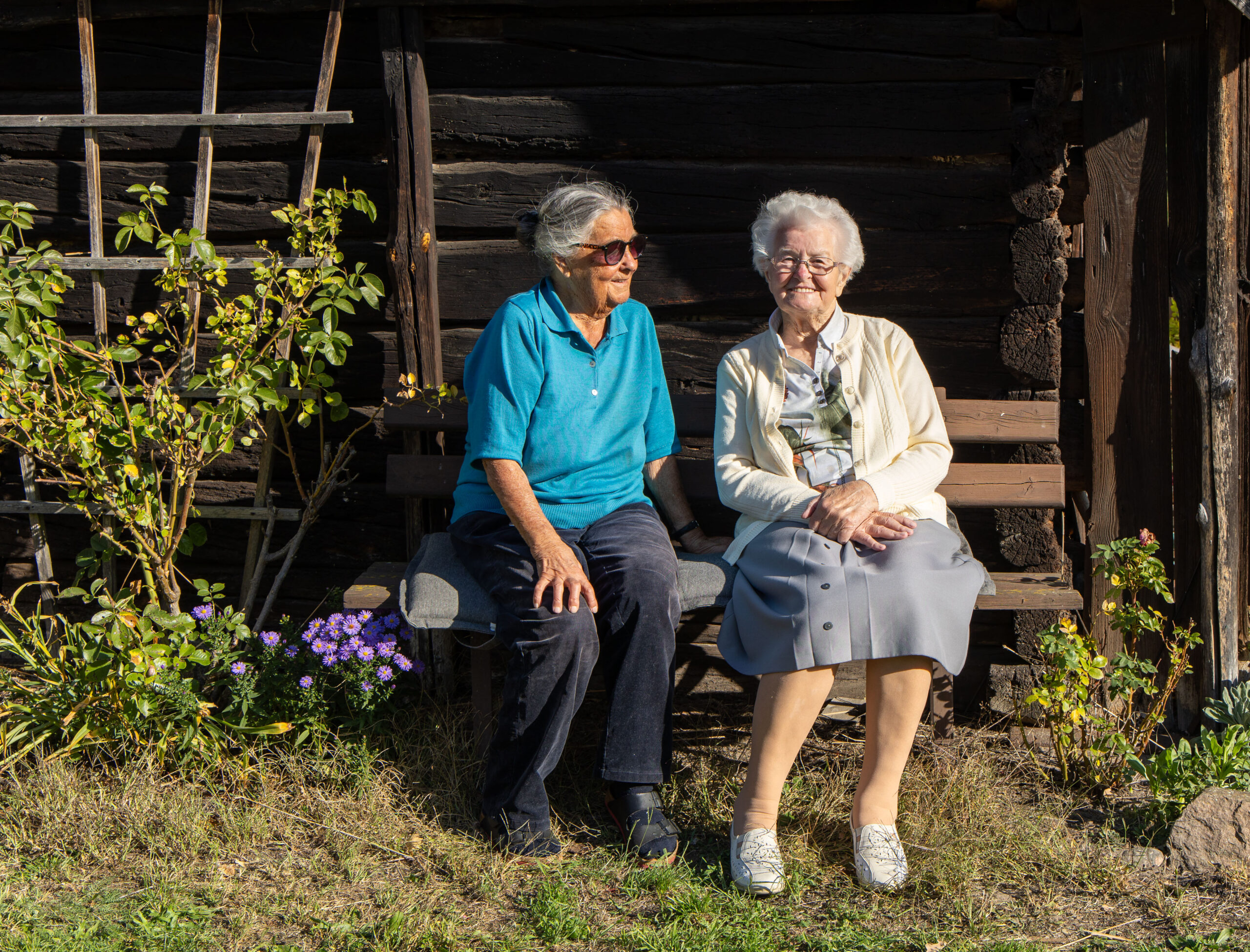
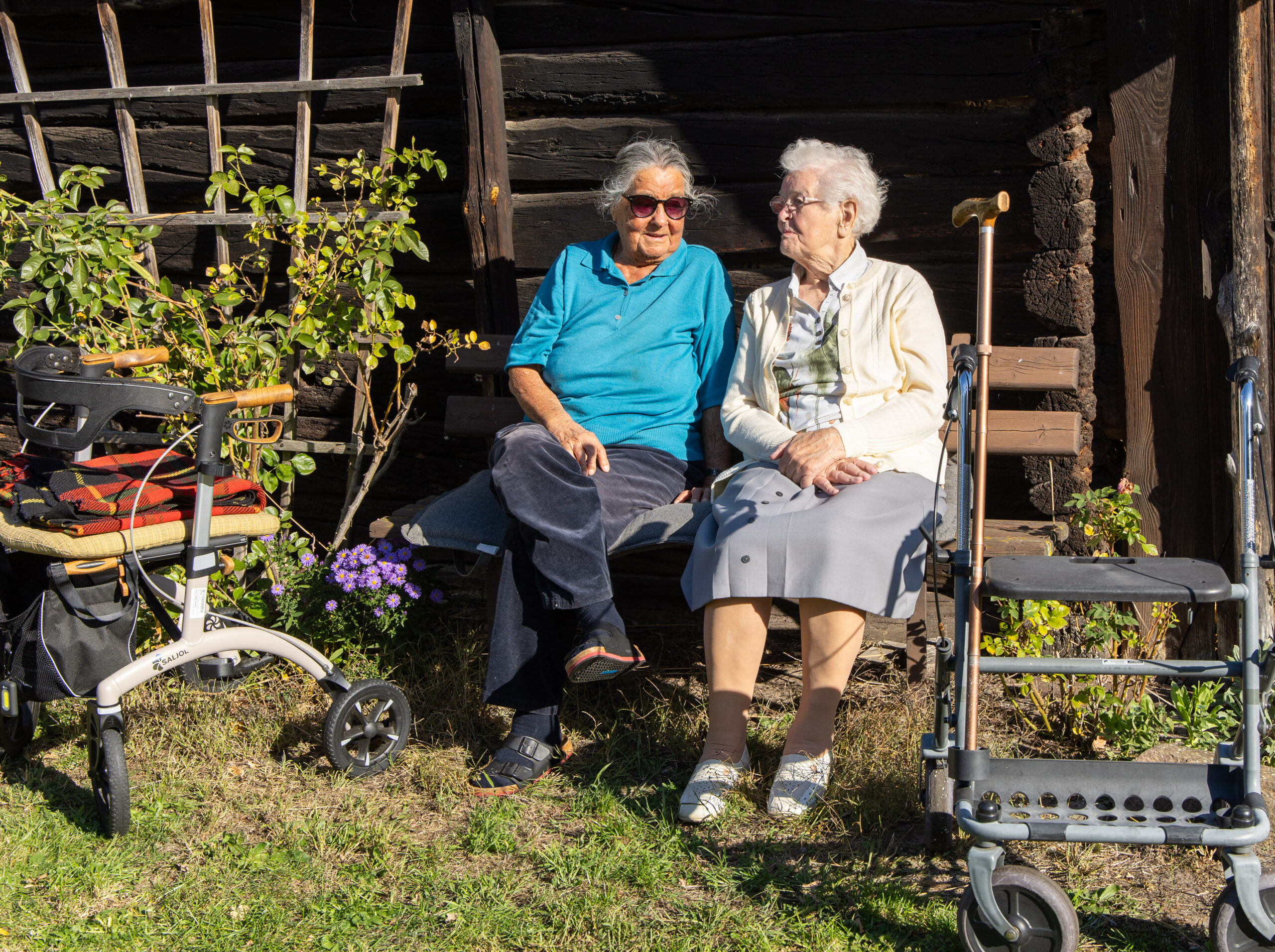
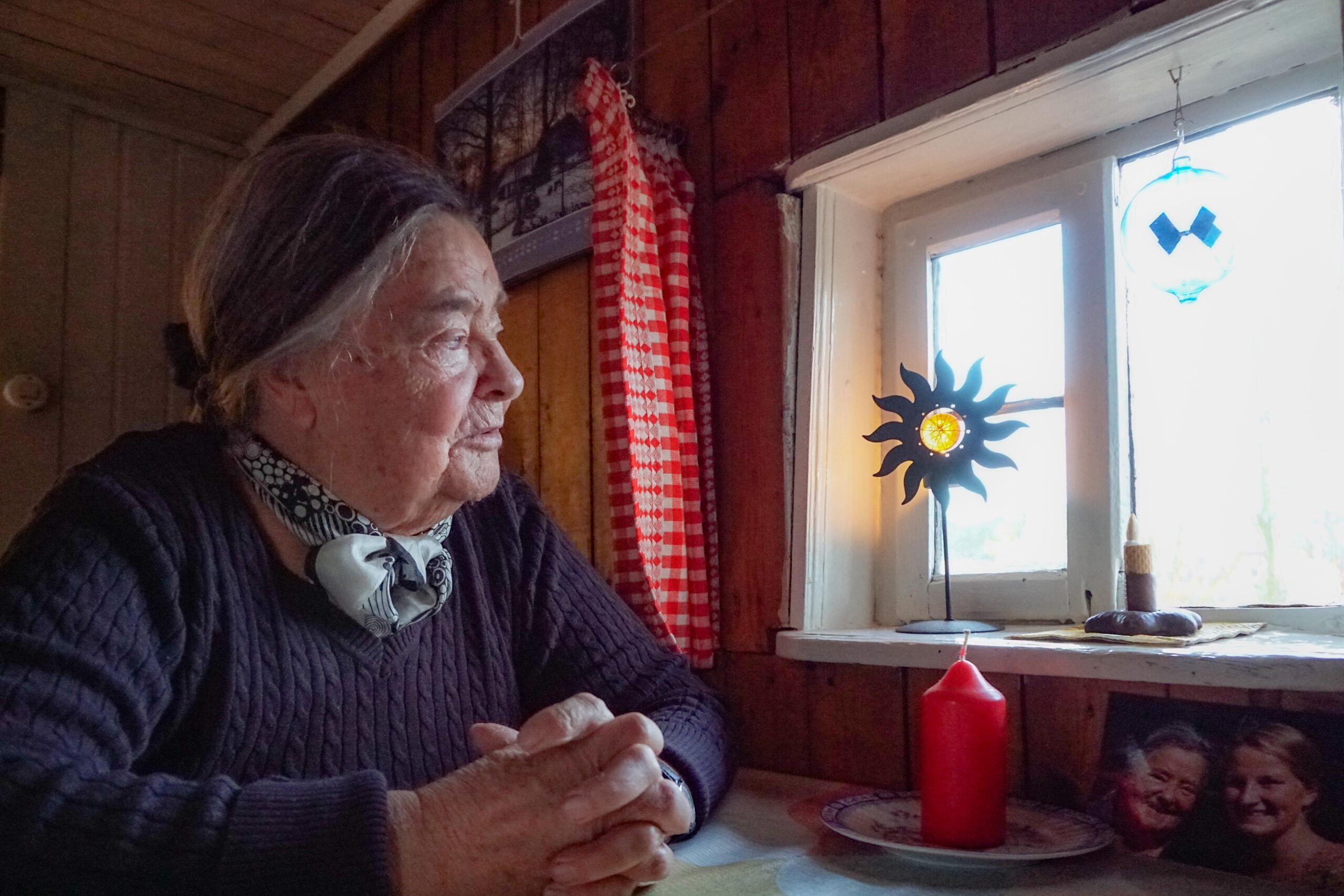
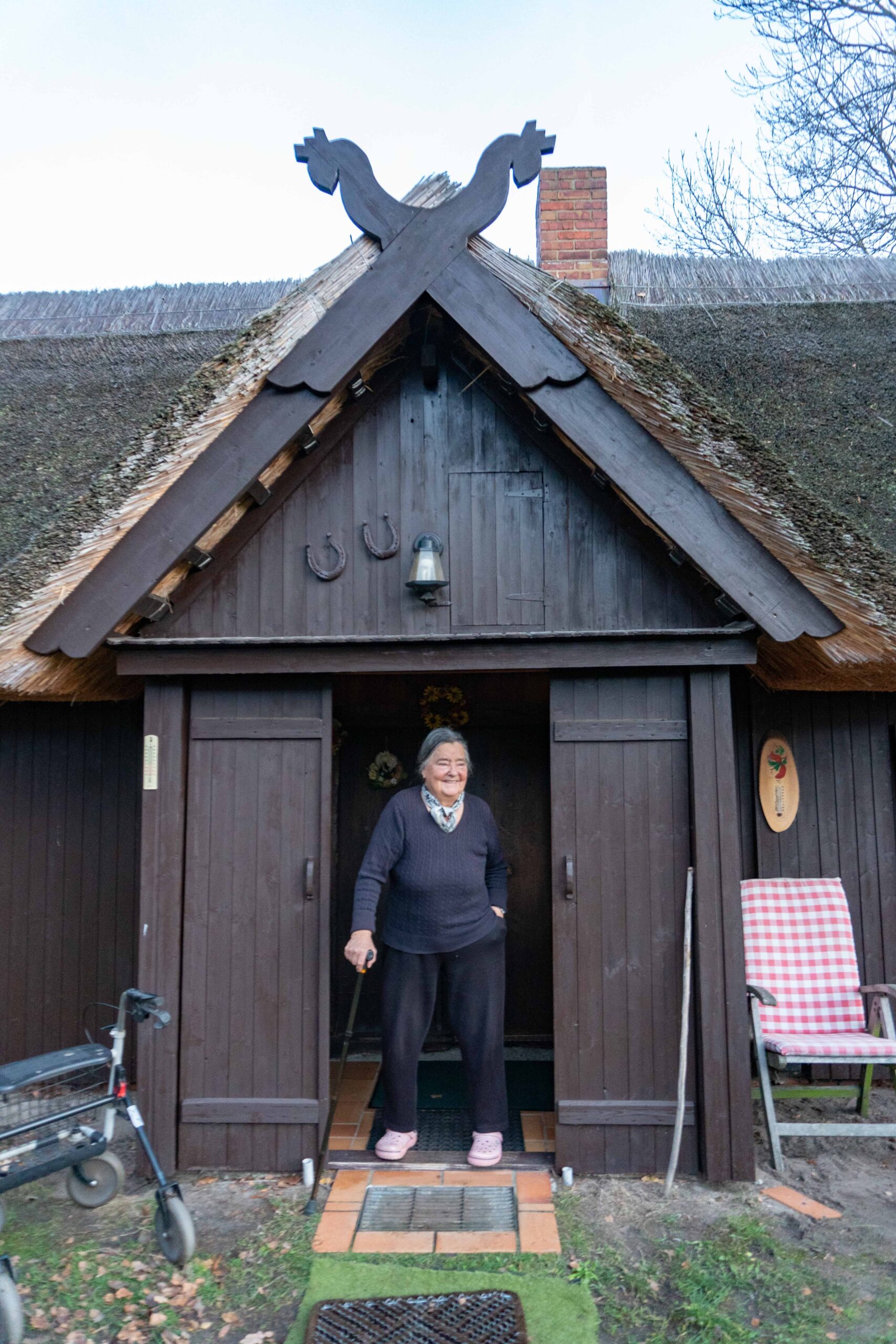
The mild October weather allows the friends to meet one more time before traveling to visit each other becomes too difficult. Although both live in Raddusch—one, Christa Lamster, in Kaupen, and the other, Gerda Zierold, at the other end of the village—there are two and a half kilometers between them. And then there are their age and health to consider: Both are 93 years old, both rely on walking aids, and often on support from their families as well. They tend to talk about their age in a casual way; they just accept it. “Gerda can run better than I can, but I can hear better,” says Christa Lamster, summing up the current situation.
Sitting in the autumn sun in front of Christa Lamster’s house, the two of them take turns telling “do-you-remember” stories. What one doesn’t know, the other makes up for. Yet they’ve long been aware of the events that shaped their lives, but it’s just “so nice to talk about them,” as Christa Lamster keeps emphasizing.
Christa Lamster is from Mücheln in Saxony, and Gerda Zierold is from Schönfeld, a town that no longer exists—her family had to leave because of open-pit coal mining.
Christa was sent to live with her grandmother in Bad Sulza for a while, and she started school there on September 1, 1939. “It was actually a wonderful and important day in my life, but the outbreak of war overshadowed my little celebration. A year later, I returned to Mücheln.” The rest of her life followed the path taken by many girls at that time: She had no plans to pursue vocational training, so instead she helped out at her father’s bakery. “You’re getting married anyway—you don’t need a career for that!” her father dismissed her aspirations.
She met her husband, Siegfried Lamster, while she was still living in Mücheln, but he soon followed the call to move to the Lusatian coalfield with his young family. In Lübbenau, they were given a nice new apartment for their family of soon-to-be three children. Christa Lamster earned her certification as a preschool teacher and found plenty of work in the newly established schools.
Gerda Zierold was spared the really big moves; she could have imagined spending her life in Schönfeld—if it hadn’t been for the excavators getting closer and closer to the village. “As a young girl, I did some terrible things that I’m still ashamed of today: I smuggled fox pelts—120 in all—into West Berlin! My father was a hunter, and in the GDR, they paid very little for a pelt. I guess I didn’t look suspicious when I crossed the border with a backpack. But I was able to help my family with the money I earned in the West. Seen that way, what I did back then probably wasn’t all that bad after all!” she tells her friend Christa—probably for the umpteenth time—since the smuggling seems to still be on her mind.
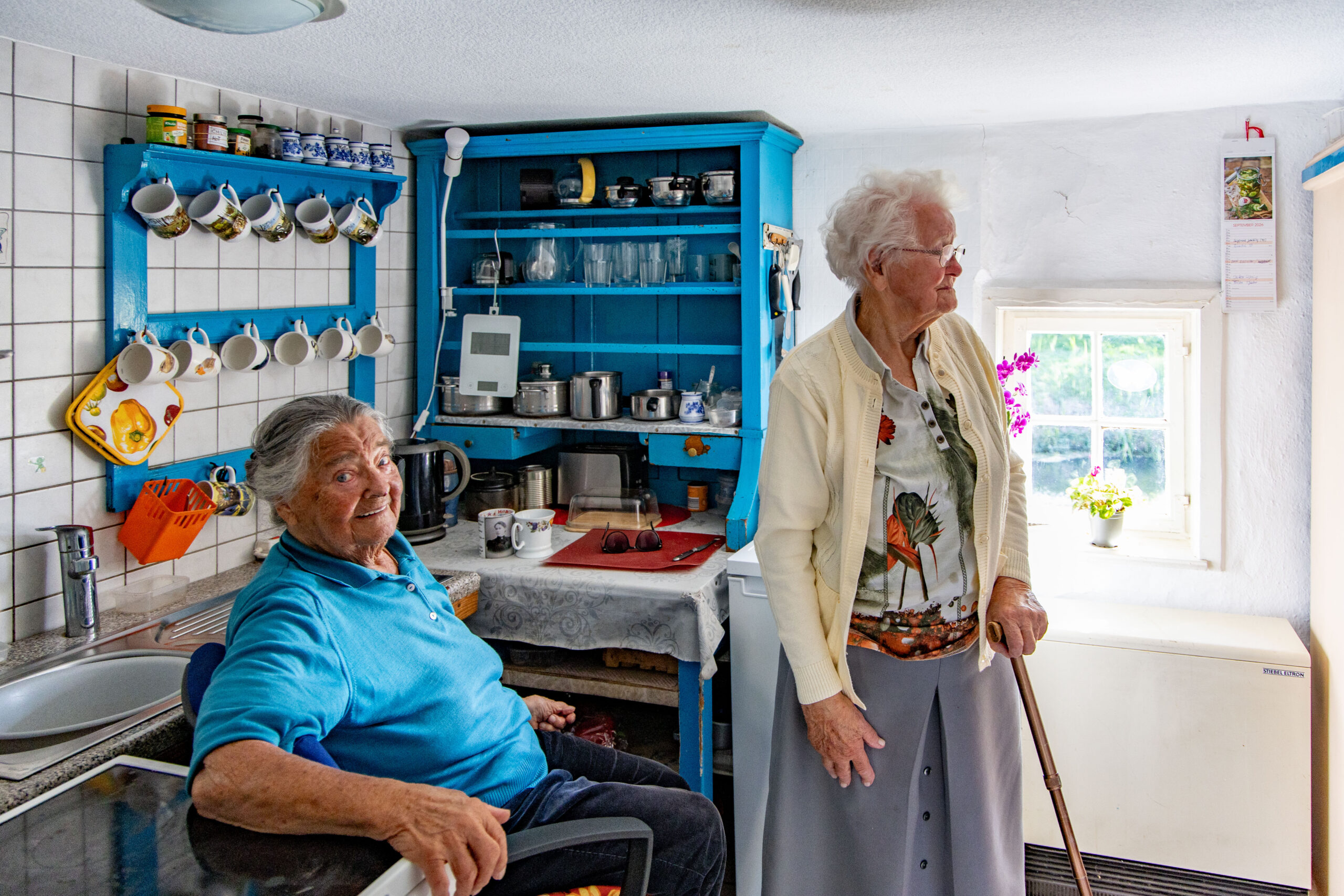
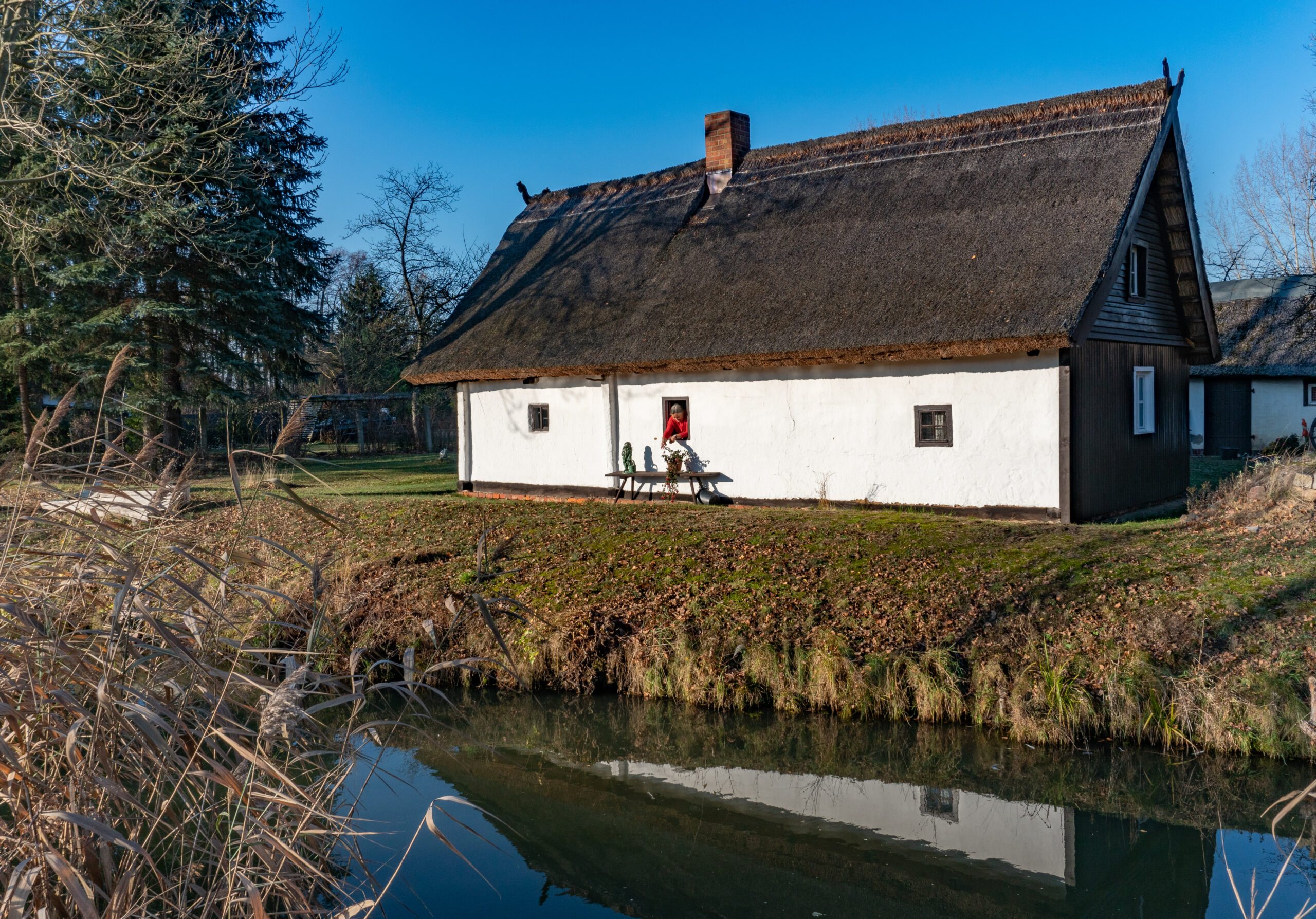
In the meantime, Gerda had married Gerhard and built a house in Raddusch. That wasn’t exactly a given back in the days of the GDR, but the comrades allowed five homes to be built in Raddusch for their energy workers. Around 1970, the lives of the two families began to intertwine rather by chance, as both men were passionate anglers and hunters—and boatmen. From then on, the families met regularly, and soon also at the Radduscher Kaupen, where Siegfried Lamster—despite all the difficulties—had purchased and renovated the oldest house in Radduscher.
Gerda Zierold worked as a cook at the Raddusch preschool before she was recruited by then-Mayor Pudlowski to serve as town clerk. “I still remember how he once came into the kindergarten, took the wooden spoon from me, and transferred me to the parish office—cadre politics back then was incredibly simple,” she recalls. Her bosses came and went, but she remained the parish secretary who knew everyone and everything until she retired.
The two of them did have one “do-you-remember” story up their sleeves after all: During a family boat ride, they must have rocked the boat a little too hard, and it ran aground. The location couldn’t have been better: It was right next to the Lamster House.

