
From Vacation Center to Event Center
Calau’s “Friedrichsfeld” Vacation Center Continues to Be Used Successfully
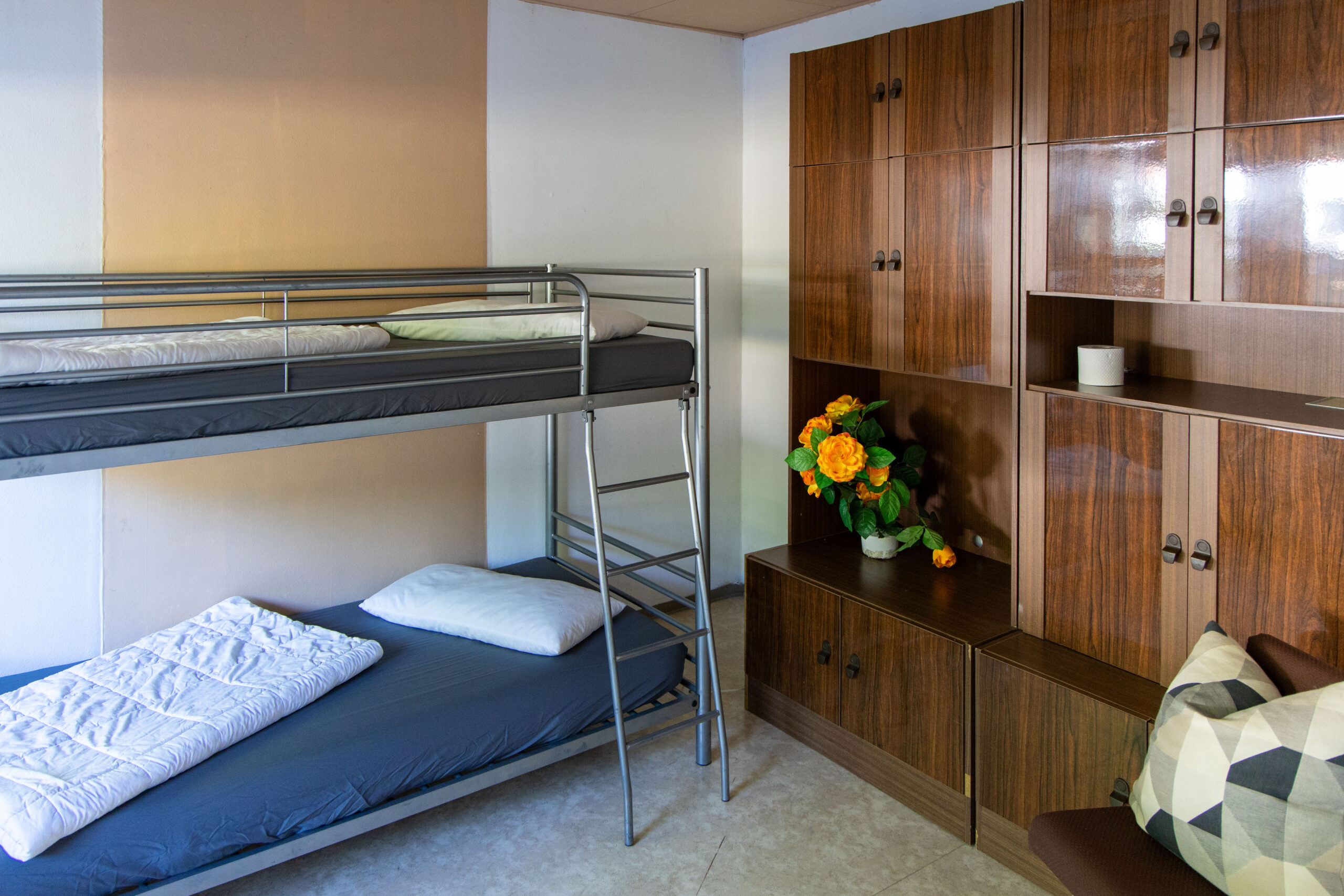
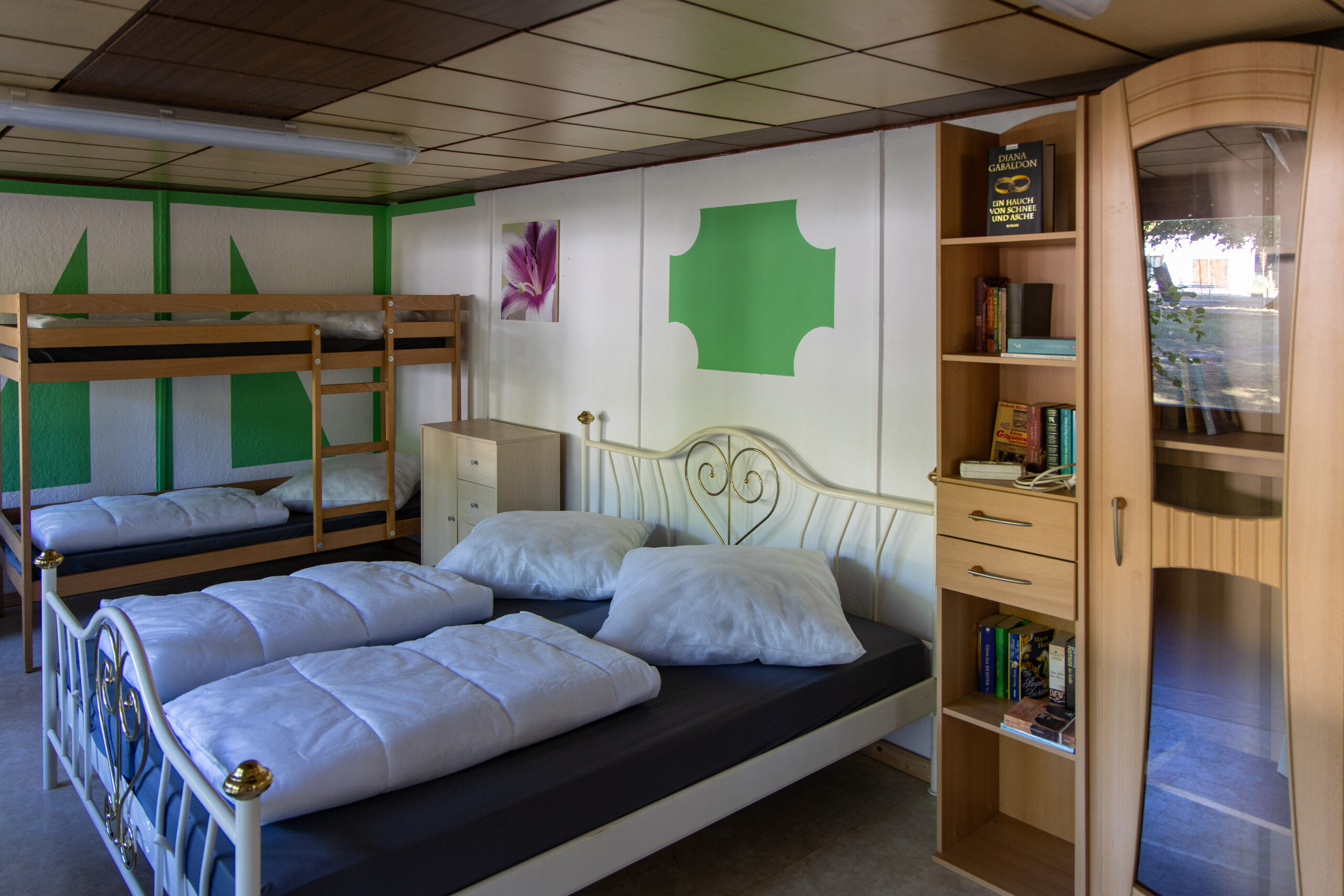
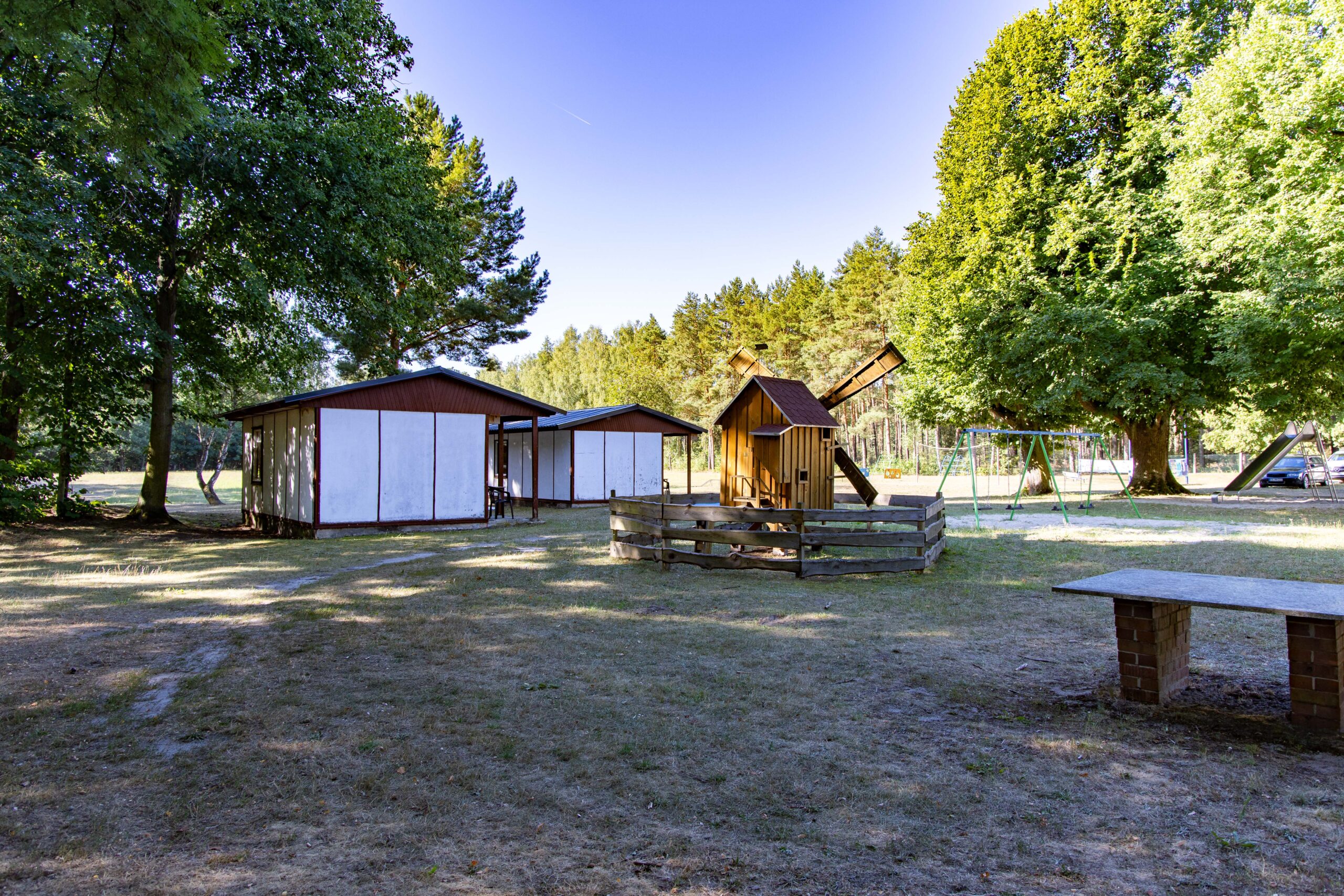
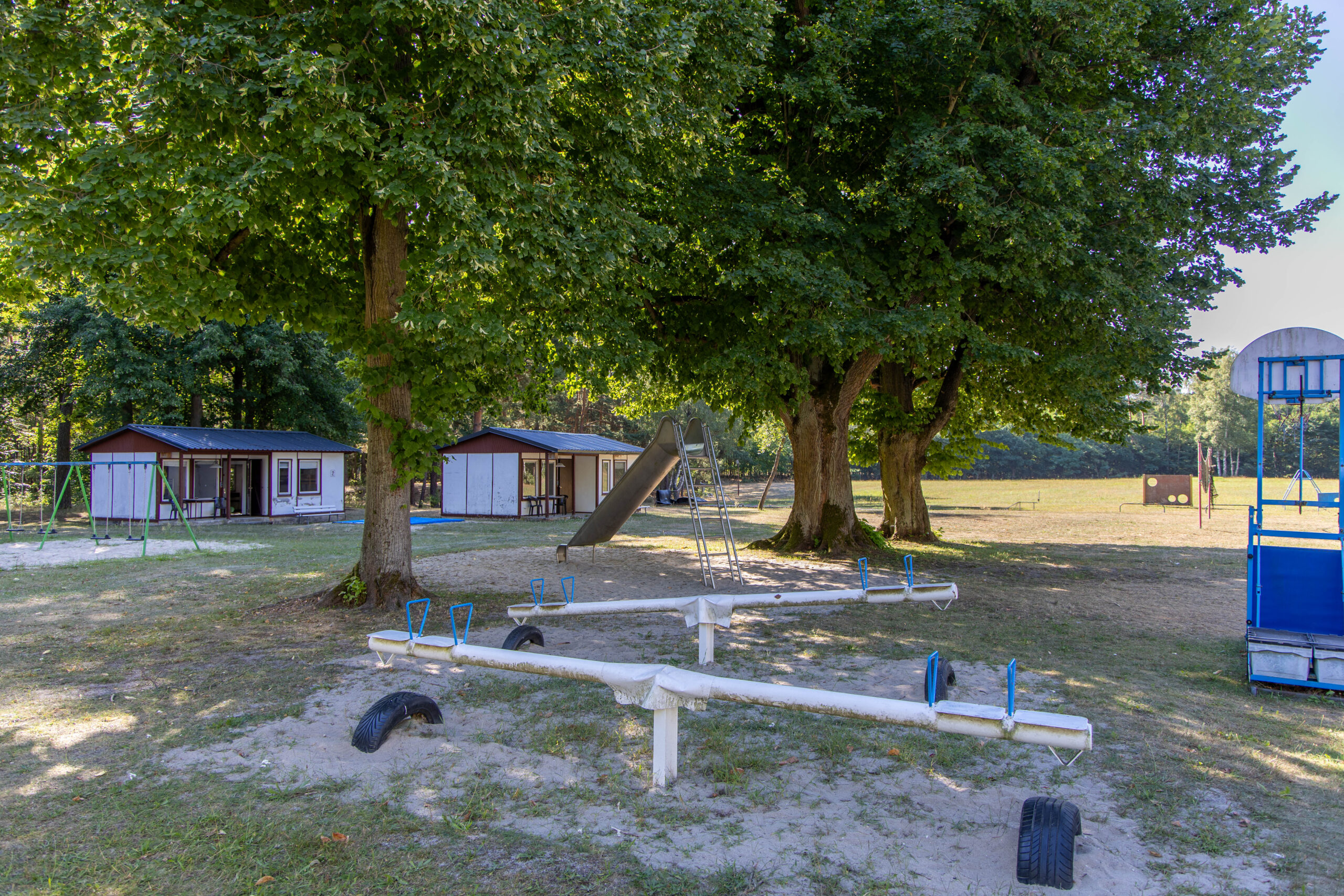
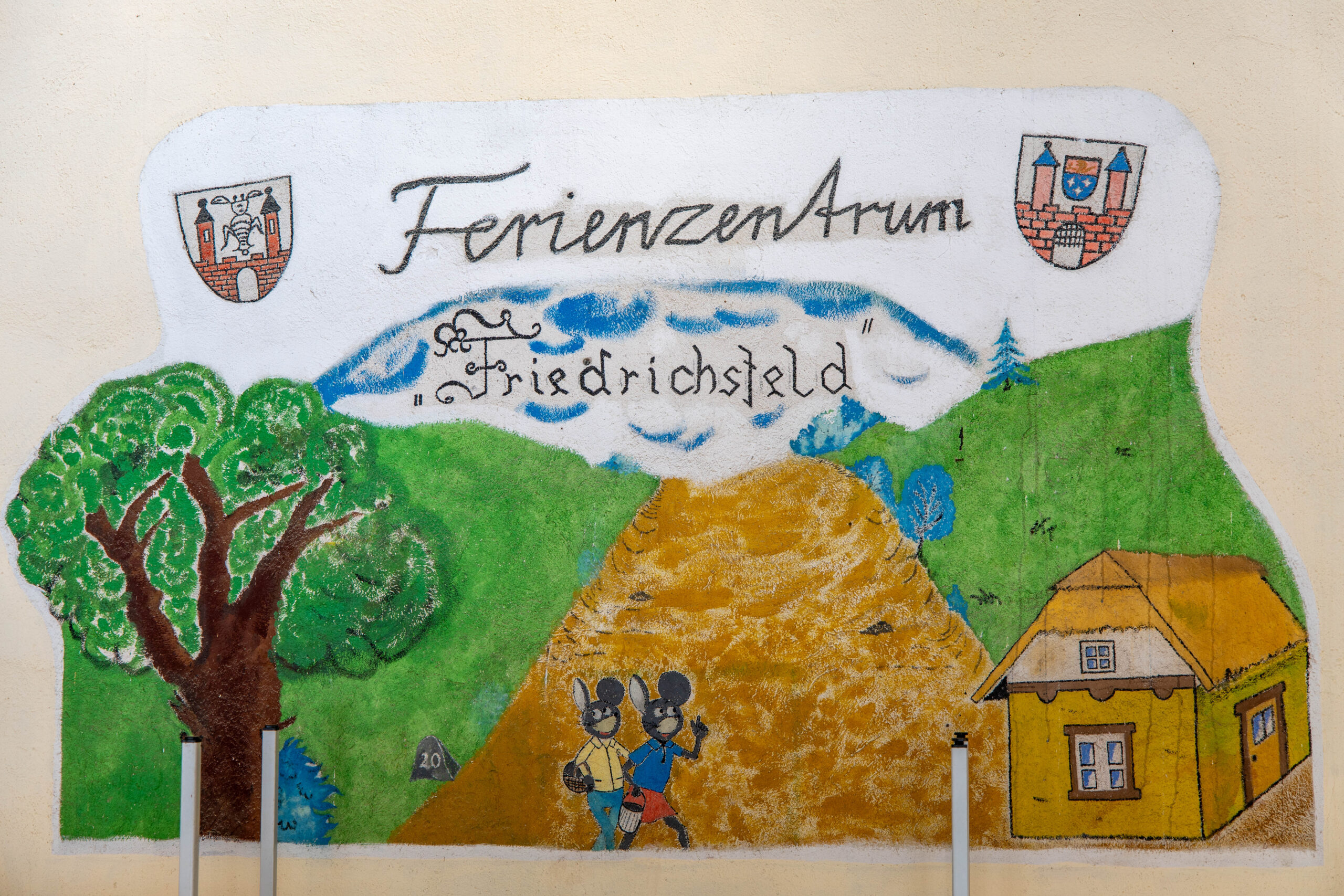
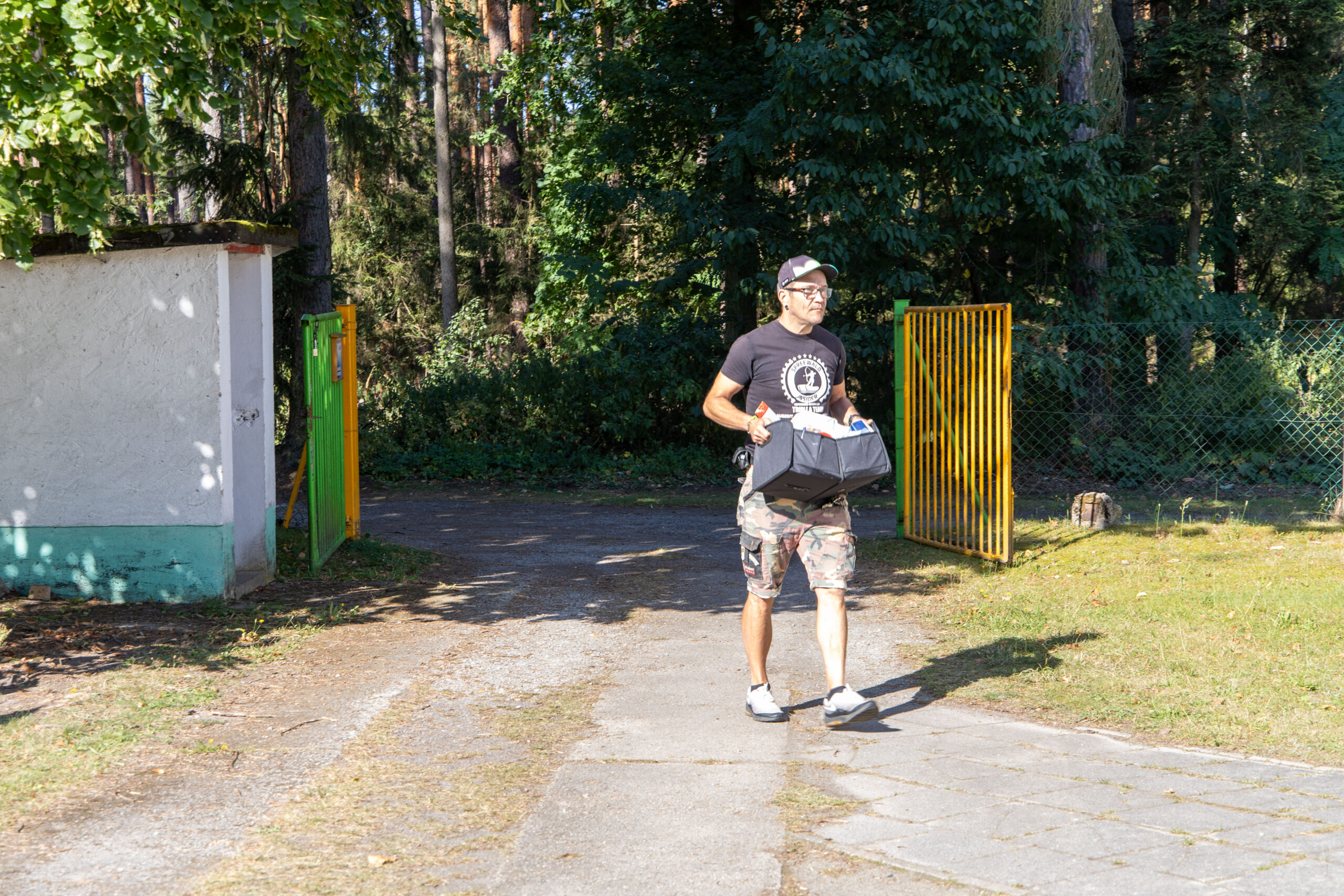
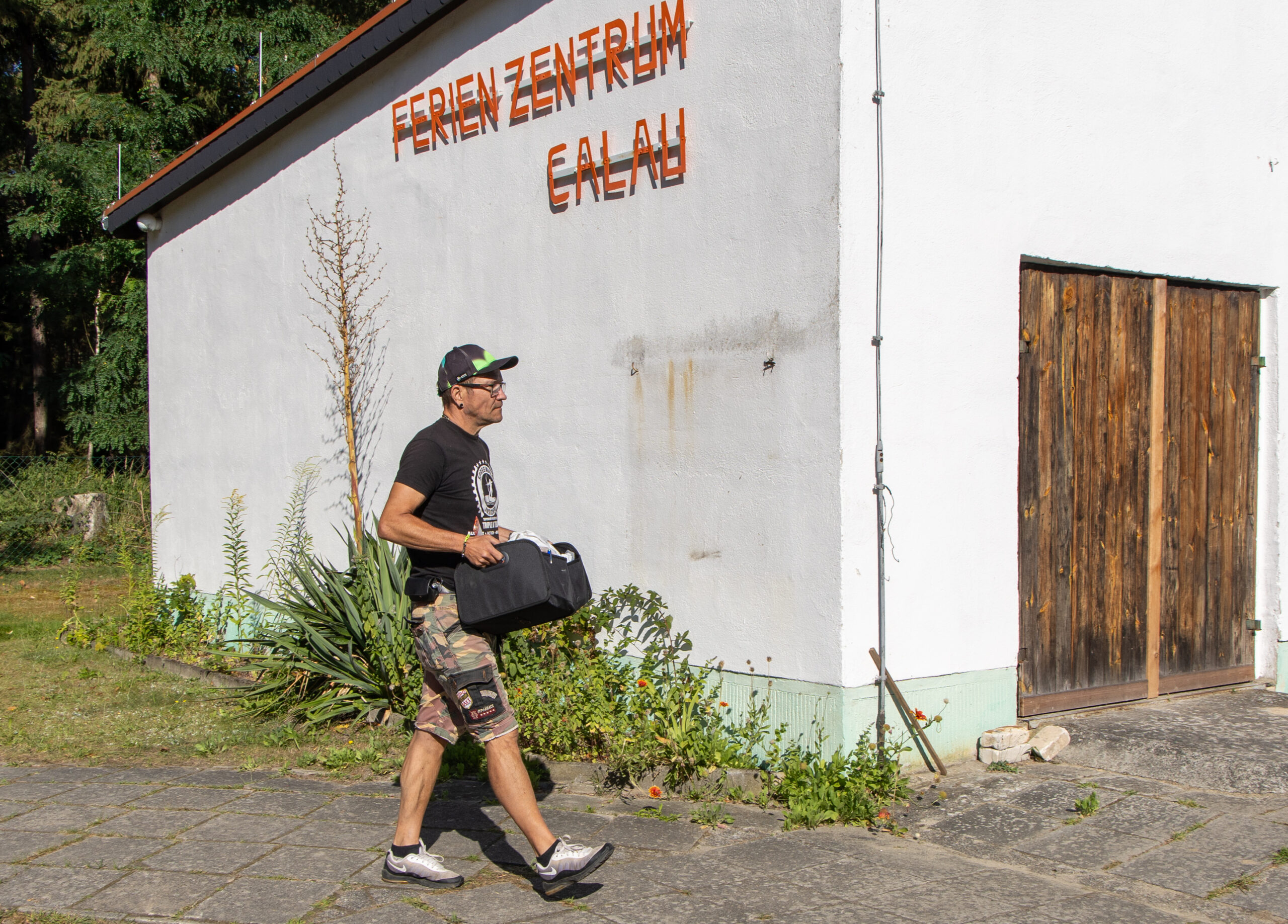
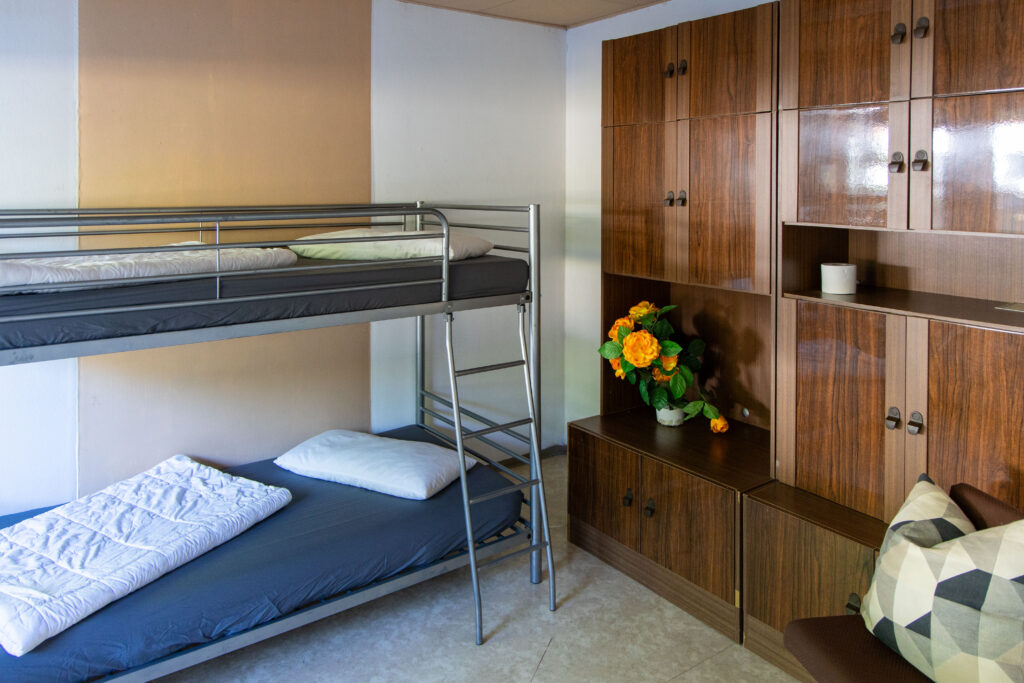
Few people are familiar with the place name “Friedrichsfeld,” the old name for the Calau vacation center. This exclave, which once belonged to the Saßleben manor, lies hidden in the woods between Calau and Missen. Around 1790, a farmstead was built here; a brickworks was added later. Starting in 1966, the GDR’s state forestry enterprise managed the property; in 1976, the city of Calau acquired the 20,000-square-meter site to establish a vacation center there for the city’s schoolchildren. The old buildings were demolished, and new functional spaces and bungalows were built, along with sports and play facilities. After German reunification, the facilities fell into disrepair, and the city of Calau considered tearing them down—a plan that, fortunately, persisted until the present day but ultimately remained only a theory. A stroke of luck for “Spreewald-Insider,” a tourism company that has set itself the goal of offering accessible programs for groups. A lease agreement for the property was signed with the city as early as 2020; payments are due only during the period of use. Lars Springer from Spreewald-Insider: “This allows us to operate cost-effectively and offer packages starting at just 15 EUR per person per night. However, everything is on a self-catering basis, including the kitchen and bathroom facilities. Bedding is provided, and sheets are included.”
The property is also offered exclusively to groups of six to 20 people (which corresponds to its overnight capacity). Bikers take advantage of this offer for an overnight stay, as do families and youth groups; even a women’s soccer team has stayed here. When you’re sitting by the grill or around a campfire listening to music, you won’t disturb any neighbors—because there aren’t any for miles around! Lake Gräbendorf, which has been attracting an ever-growing number of visitors, is just a short drive away, and bicycles are also available for rent.
Lars Springer: “Of course, we also benefit from Friedrichsfeld’s location on the edge of the Spreewald, because we offer additional options right in the heart of the Spreewald that are particularly well-suited for family or corporate events. In the long term, we should work with the city to consider reverting to the old name, Friedrichsfeld, because the current name doesn’t convey what we truly offer: We’re constantly evolving, becoming more modern, and at the same time placing a greater focus on nature. We’re currently considering whether to make the grounds Wi-Fi-enabled, since our target audiences miss having that—though we’re more in favor of disconnecting from technology for a while, even if it’s just for a weekend—but as we all know, the customer has the final say.”
View the listing: https://spreewald-insider.de/
From the History of the Friedrichsfeld Exclave in Saßleben
By Helmut Jentsch – courtesy of Matthias Nerenz
Friedrichsfeld is an exclave belonging to the former Saßleben manor, located between the municipal boundaries of Calau and Missen (formerly Altnau and Gahlen). From a geological perspective, the area lies in the transition zone between the Lower Lusatian Ridge and the ground moraine landscape of the Calau-Luckau Basin. The soil consists mainly of sand, which in many places is underlain by impermeable loam, clay, or marl.
Based on current boundaries, the area covers about 41 hectares, but according to topographic maps from 1820 and 1846, it likely covered more than 50 hectares. After the Thirty Years’ War (1618–1848), many farmsteads lay vacant, and the estates lacked labor and taxes. As a result, they sought to expand their self-sufficient economy. For this reason, von Rauschendorf, the owner of the manor in Saßleben, purchased from the Calau Council “500 steps of land, beginning at the Gahlisch border and the Altnauische Puschen, for use as pasture, for 600 guilders in cash.” Through the Altnauische Flur, he was granted a “convenient route” to drive his livestock from Saßleben to this pasture (HOUWALD 1988).
There is no documented explanation for the name Friedrichsfeld. He is probably referring to Adam Friedrich Haake, who owned the manor from 1697 to 1732. For over a hundred years, the land was used solely as pasture for livestock, as the 18th century was a difficult time economically. No sooner had the country recovered from the devastation of the long war than the Great Northern War (1700–1709) and other wars brought fresh misery, particularly the passage of troops, levies, and other hardships.
The Friedrichsfeld pasture consisted of heathland and grasses and was covered with a sparsely distributed stand of trees. Around the middle of the 19th century, as part of the agrarian reforms, additional land was added in the Freibergen region as compensation for grazing rights. This represented a significant expansion of the Friedrichsfeld estate, since the 500 paces mentioned above amounted to only 376.6 meters. (According to SPERLING 1994, 1 step = 75.32 cm)
By 1790 at the latest, a farmstead had been built in Friedrichsfeld on the Saßleben estate, and parts of the overgrown pastureland had been converted into farmland. The fields were located mainly north of the farmyard. According to the 1846 map, it was approximately 100 meters wide and 125 meters long. There were two buildings: a house and a stable. The farm was larger than it is today and extended farther to the north and east. The path that runs along the west side today was already in the same spot 200 years ago. A path that led from the farmyard to the northeast and on to Gahlen still exists today as a forest trail. Until 1856, the road from Calau to Muckwar ran about 80 meters further to the northeast, parallel to today’s highway. Its route is still preserved today as a forest trail.
For over 170 years, several families lived in the house that belonged to the manor. The church records of the Saßleben parish indicate that in 1796, the steward Christian Voigt had a daughter born in Friedrichsfeld. A year earlier, an illegitimate child had been born to the Lehmann family, who also lived there. At that time, two other families were still living here. On February 5, 1798, the house burned down; “three people lost their lives: Hans Lehmann of Büdner, along with his mother and sister” (church records). The building was soon made habitable again, for “on September 14, 1799, Christian Voigt’s wife gave birth to a baby boy, who was baptized on September 16.” In the decades that followed, the tenants of Friedrichsfeld included farmhands, day laborers, wheelwrights, farmers (team leaders), and noblemen’s coachmen.
Starting around 1840, a brickmaker and several bricklayers also lived in the house, because a brickworks was built around 1840 at the point where the path from Friedrichsfeld crossed the old Calau-Muckwar road, about 200 meters south of the house. According to SPERLING (1989), there was a single-chamber brick kiln 15 m in diameter and, across the street, a drying shed 32 m long and 7.5 m wide. Loam, clay, and sand were excavated in the immediate vicinity.
The estate was part of the Saßleben manorial estate and was managed by the lord’s forester. Judging by the 1846 map, there was a rectangular brick kiln here, in which firing likely took place only once a year. In the spring, the brickmakers began their work by extracting clay from the surrounding area. The raw material was then made workable through soaking.
The work of the bricklayers, which took several months to complete, is aptly described in SPERLING 2002:
“The bricks were shaped on what are known as molding tables.” They consisted of a work surface and two troughs on either side for the prepared clay and the water used to moisten the molds. Two string players were sitting across from each other at a table. After moistening the mold by dipping it in water, they placed it on the table and threw a suitably large lump of clay into it with a flourish. They used their hands to press the clay into the mold so that it was completely filled. Excess clay was scraped off with a small wooden board or a piece of round wood. The brick blanks were tipped out of the mold onto boards, which were usually placed in open sheds to let the bricks dry.
In the fall, the dried bricks were stacked in the kiln and surrounded by fuel (wood, and later, presumably, raw coal as well). After the door was closed, the fire was set in the air vents located at the bottom of all the exterior walls. The fire was monitored very carefully; fuel often had to be added. The firing process took 20 to 24 days. This process consumed about 5 metric tons of coal or an equivalent amount of wood. “In the spring, after the stove had been cleaned out, the merchandise was ready for sale.”
One of the first brickmakers was Johann Gottlieb Wesnick (1796–1854), who began as a farm laborer and worked at the brickworks from 1840 until the end of his life. His son, Johann Christian Wesnick (1822–1883), also toiled his entire life in the clay pit, the brick barn, and at the kiln. Around 1860, the master brickmaker was Traugott Kochan; later, until the end, it was Johann Christian Wesnick. Approximately 20,000 masonry bricks or 30,000 roof tiles were fired each year. At times, the company also supplied coping stones, decorative stones, ridge tiles, and interlocking tiles. For example, the Calauer Kreisblatt published an advertisement that read: “The Friedrichsfeld Brickworks is once again selling bricks and roof tiles, effective immediately. Saßleben, April 2, 1859. Papke, Forestry Administration.”
In the 1880s, the brickworks had to close because it could not compete with modern brick factories. The buildings were demolished. Today, only a few pits remain from the clay mining operations.
The entire territory of Friedrichsfeld has now been reforested. Just a plot of farmland immediately south of the farmyard—which still serves as a sports and playground today— and a 1.25-hectare field located 400 meters northwest of the buildings at the intersection of the old roads from Friedrichsfeld to Altnau and from Gahlen to Weißag have remained free of forest.
Wilhelm Schmidt (1835–1918), a forest worker, forest ranger, and later forest supervisor, lived in Friedrichsfeld with his family beginning in the 1860s. For more than half a century, he worked here on behalf of the Saßleben estate forester. He probably played the largest role in the work required at that time to reforest this part of the Saßleben Woods. He probably farmed the two plots of farmland that remained in the district himself, since he is listed once in the church records as a “tenant farmer.” Other families who worked on the Saßleben estate lived in the house. The church records list Welsch, a day laborer, in 1888; Reinhold Lehmann, a laborer, in 1902; and Kurt Jockel, a laborer, in 1929. Most families had quite a few children, and the church records also document the high infant mortality rate at that time.
The children from Friedrichsfeld went to school in Ogrosen. Most children left home after they got married. Thus, the daughter of the bricklayer Christian Wesnick became part of the Kamenz family, which now lives in Calau, and the daughters of Wilhelm Schmidt later lived in Rochusthal (Peschk), Werder (Steffen), Zinnitz (Lehmann), and Tornitz (Schoetz).
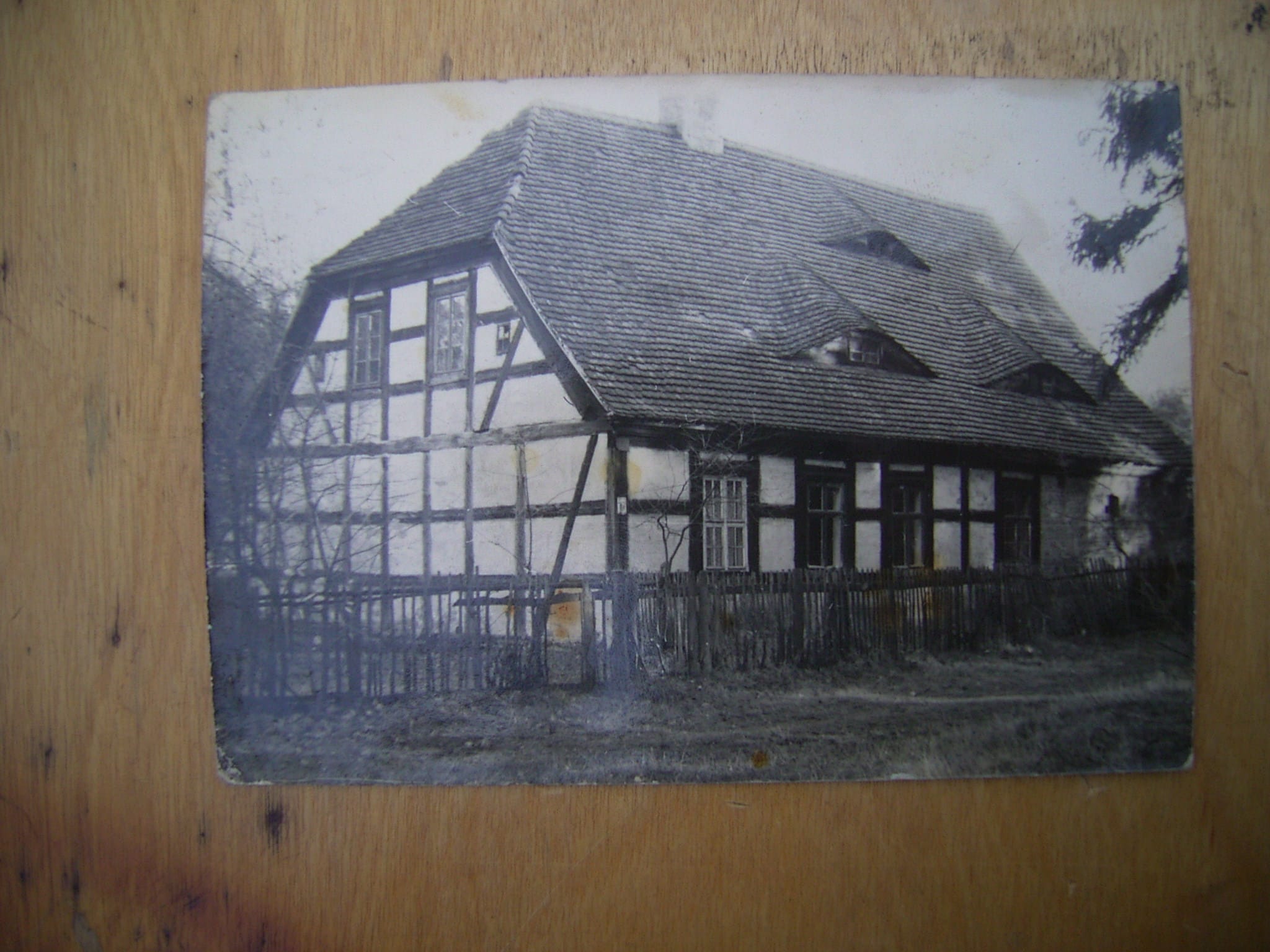
While the 1846 map shows that the outbuildings (stables, sheds) were located on the north side of the farmyard, by 1900 they were situated south of the residence. It lay lengthwise along the path leading to the highway. In addition to numerous rooms, the house also had the “black kitchen” that was common in the past. The horse and cow stables, as well as the feed kitchen, were built directly onto the south gable of the house. Next came the gateway, and then, with its gable facing the street, a long building that housed pigsties, a barn, and sheds.
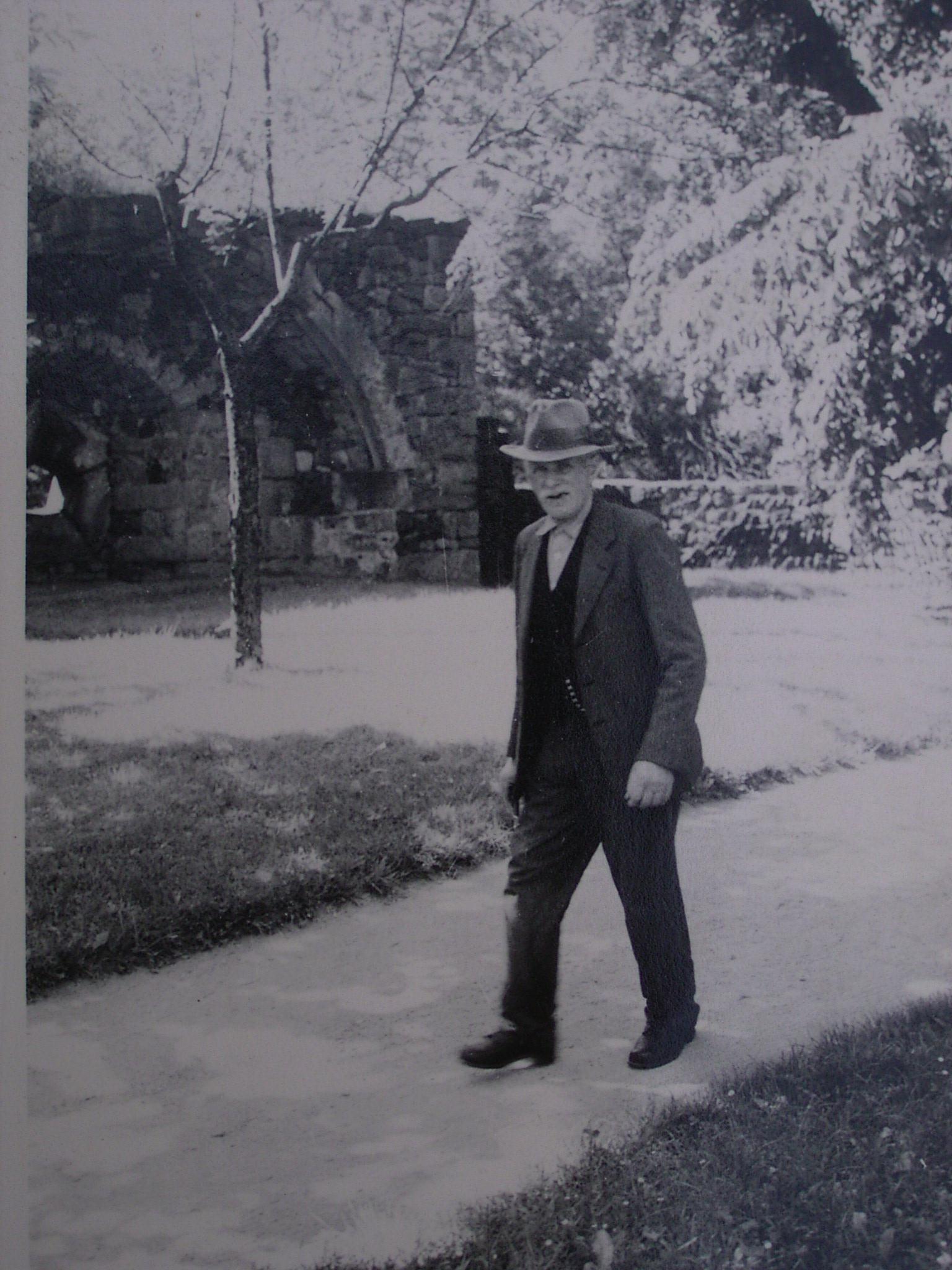
One of Wilhelm Schmidt ‘s sons in Friedrichsfeld was Oswald Schmidt (1880–1966). He trained as a carpenter and initially worked for many years at the Saßleben estate; after 1945, he worked for the Noack construction company in Calau. There had never been electric light in the house; even around 1960, people still lived there as they had in the 19th century (oral account) (Wilfried Wildschütz, center ). In 1945, the farmstead was spared the worst of the war’s ravages. During the first few months after the war, a Red Army ammunition recovery unit visited Friedrichsfeld several times to fetch water. When an officer learned that Mr. Oswald Schmidt had worked for the estate for many years, he arranged with the relevant German authorities for the property, including the land, to be transferred to the family as part of the land reform of 1946. The Strauchmann family, who were refugees, continued to live in that house for many years. Since members of the Schmidt family had owned their own property in Gahlen since 1935, Friedrichsfeld was returned to the state after the parents’ death in 1966.
The State Forestry Agency had owned Friedrichsfeld since 1966 ( oral Wed. Ms. Thiel). He managed only the wooded areas; the Agricultural Production Cooperative used the buildings to store machinery and equipment.
In 1976, the town of Calau purchased the 1.5-hectare Friedrichsfeld farmstead to establish a vacation center for Calau’s schools. All the old buildings were demolished. A new main building was constructed, featuring a kitchen, a large dining room, restroom facilities, and two bedrooms. In addition, there were several bungalows, other ancillary facilities, sports and playground equipment, and a large sports field. The entire property was secured with a fence. Naturally, the property is now supplied with electricity from Gahlen. During the 1970s, there were also efforts to build an outdoor swimming pool for children on summer vacation in neighboring Schafteich, but these efforts were unsuccessful. In addition to students from Calau, students from other schools are also taking advantage of available slots at the vacation center today. In addition, the Calau chapter of the “Blue Cross” has been using the facility for its meetings since 1993. In return, the members are responsible for the ongoing maintenance of the buildings and facilities. The BVVG (Treuhand) has been the owner of the forest lands since 1990. It is working to transfer the forests to private ownership.
The author would like to express his sincere thanks to Pastor M. Schmidt (Kalkwitz) for the valuable information from the church records, as well as to Ms. Förster (Calau), Ms. Thiel (Calau), and Mr. W. Wildschütz (Gahlen) for their verbal contributions. Special thanks go to Mr. D. Sperling (Cottbus), whose publications were a valuable resource.
References:
Sperling, D. (1994): Measures, Weights, and Coin Units, typescript.
Sperling, D. (1989): Highlights from the History of the Municipality of Saßleben, Calau District, typescript.
Sperling, D. (2002): Raw Material Extraction and Abandoned Mines in the Calau Mining Area, Cottbus 2002.
Houwald, G. Fr.v. (1988): The Knightly Estates of Lower Lusatia and Their Owners, Vol. IV Calau District, Part I.
Thanks to Matthias Nerenz (Calau) for providing the historical source!
Peter Becker, August 20, 2026

